Fortune's Legacy for Tarot Pathworking
by Redazione · 9 October 2026 · 4 min read
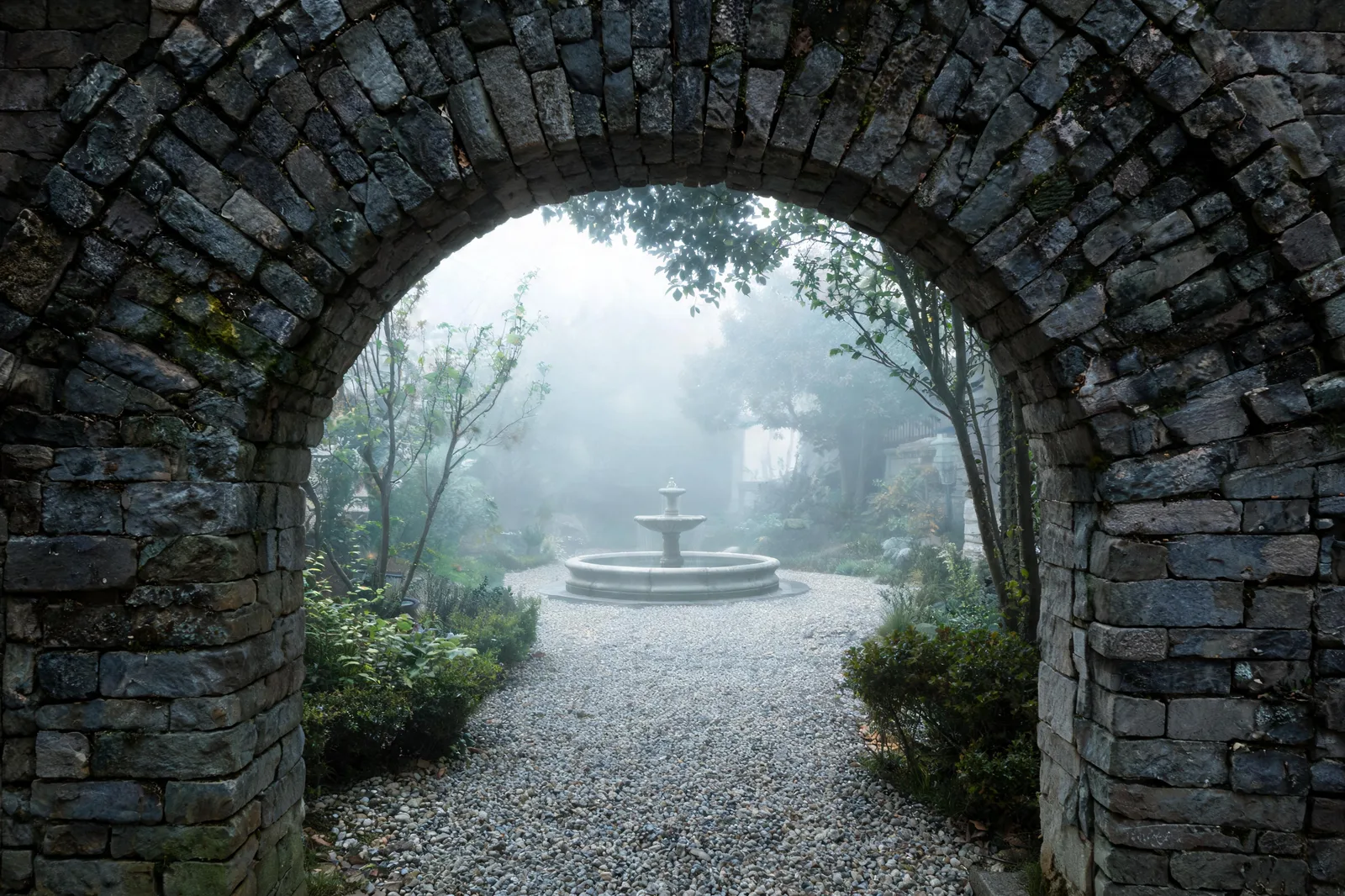
Tarot pathworking owes its basic method to Dion Fortune more than to any single Golden Dawn paper, since she took a scattered ritual technique and wrote it up as a repeatable discipline any serious student could actually practise alone. Pathworking means entering a guided visualization keyed to one of the Tree's twenty-two paths, each tied to a trump, a Hebrew letter, and a specific inner landscape to walk through rather than merely read about. As the previous part of this series showed in The Sea Priestess and the Moon Card, Fortune treated imagination as a genuine faculty of perception, and pathworking is where that principle becomes a concrete, teachable practice.
From Scattered Ritual to Repeatable Method
Golden Dawn temples had used guided visualization before Fortune, but often as one tool among many ritual techniques, taught unevenly and rarely written down in full. Fortune extracted the method, refined its structure, and published enough of its logic in The Mystical Qabalah that a disciplined reader could reconstruct a working session without a lodge's direct supervision. This democratizing move mattered: pathworking became something a solitary student could responsibly attempt, not only a closed-order privilege.
Her method kept a consistent shape: a quiet preparation, a symbolic doorway corresponding to the path's letter, a journey through an inner landscape built from the sephiroth at either end, and a careful, deliberate return to ordinary awareness. That return mattered as much as the journey; Fortune insisted a working was incomplete and potentially destabilising without it.
Why the Tarot Fits Pathworking So Well
The tarot's trumps gave Fortune's method an immediate visual entry point that bare Hebrew letters alone could not supply. A student approaching the path of Qoph met The Moon directly, its crayfish rising from dark water, its twin towers framing a narrow road, each detail a feature of the landscape to be walked rather than merely admired on paper. The card functioned as a door, not a destination.
This is why Thoth-deck readers in particular have adopted pathworking so readily: Harris and Crowley built the deck with sephirotic correspondence already encoded into composition and colour, making their trumps unusually well suited to the kind of inner travel Fortune's method describes.
A Working Session, Briefly
A typical session begins with the student settling into stillness, then visualizing the trump itself as a doorway, its colours and figures growing vivid enough to seem to open rather than merely to be pictured. The student steps through into a landscape built from the path's correspondences: a desert for Qoph, a mountain ascent for Yod, a tangled forest threshold for Teth approaching Lust. Encounters within this landscape, a figure, an obstacle, a gift offered, are treated as genuine information, not idle fancy, to be recorded and considered afterward rather than dismissed.
Fortune insisted that beginners work under supervision where possible and keep sessions short, disciplined, and always closed properly, a caution later writers sometimes dropped.
Fortune's Caution Still Matters
Not every path rewards casual visiting. Fortune warned particularly against lingering near paths bordering the abyss or touching qliphothic imbalance, echoing the restraint discussed in The Qliphoth in Dion Fortune's Writing earlier in this series. Her model treats pathworking as a genuine discipline with real stakes, not a harmless guided meditation to attempt without preparation or structure.
This caution has aged well. Writers on imaginal practice more broadly describe similar concerns about undisciplined inner work, a convergence Fortune would likely have found unsurprising given her own background in psychology.
A Series' Conclusion
Across this series, from her biography through The Mystical Qabalah's structure to her fiction and her caution about the qliphoth, Fortune's consistent contribution was discipline applied to imagination. Tarot pathworking, her clearest practical legacy, asks a reader to treat the cards not as static pictures to interpret from a safe distance but as doors a prepared mind can actually walk through, carefully, and return from changed.
Questions
What is tarot pathworking?
A guided visualization keyed to one of the Tree of Life's twenty-two paths, each tied to a tarot trump and a Hebrew letter, used to explore that path as an inner landscape.
Why is Dion Fortune credited with the method?
She extracted a scattered Golden Dawn ritual technique and published its structure clearly enough for a disciplined solitary student to practise it responsibly.
Why does the tarot suit pathworking well?
The Thoth deck's trumps encode sephirotic correspondence directly into composition and colour, giving a visualizing student an immediate, vivid doorway into each path.
Did Fortune see any risk in pathworking?
Yes, she warned against lingering near paths bordering the abyss and insisted every session close properly, treating the practice as a real discipline, not casual meditation.
This article talks about
You might also like
 Kabbalah
 Kabbalah
 Kabbalah
© 2026 TAROTS chat (tarots.chat). All rights reserved. No part of this article may be reproduced, distributed or adapted without the owner's written permission.
The Journal
 Thoth Tarot
 Cups
 Spirituality
 Spirituality
 Kabbalah
 Symbolism
 Symbolism
 Symbolism
 Kabbalah