The Twenty-Fifth Path: Samekh and Art
by Redazione · 9 October 2026 · 3 min read
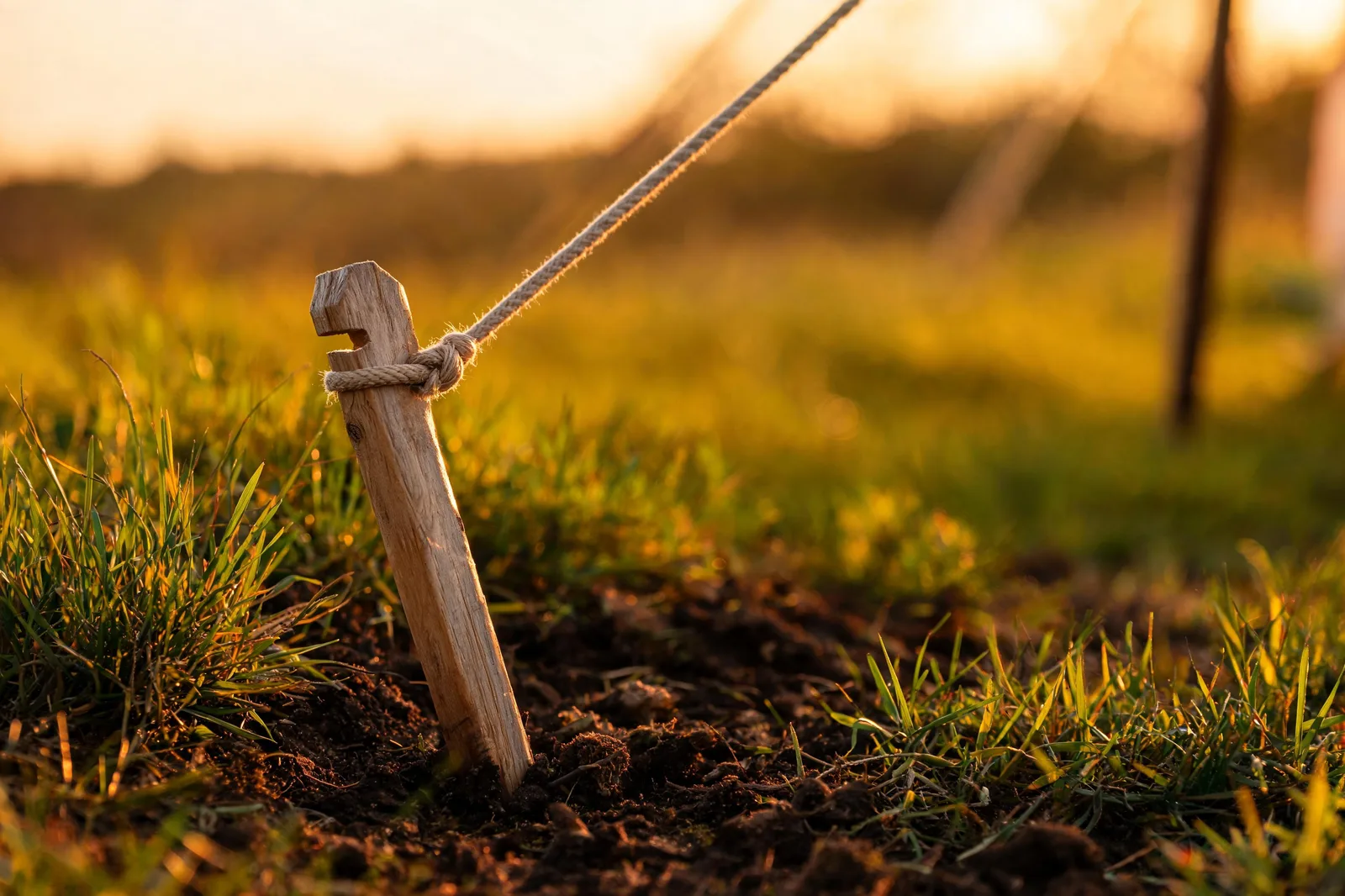
The twenty-fifth path samekh connects Tiphareth to Yesod, and it carries the trump Art. Golden Dawn attribution gives this path the Hebrew letter Samekh, a prop or a tent peg, and the zodiac sign Sagittarius. After Nun's intense release, this path offers something steadier: a structure that holds two opposite forces together long enough for them to combine.
A Gentler Path After Nun
The The Twenty-Fourth Path: Nun and Death article described transformation as a current that could not be stopped, only guided. Samekh's path begins at that same sphere, Tiphareth, but runs down instead to Yesod, the sphere of the foundation, the subconscious and the astral image that precedes physical form. Where Nun released, Samekh combines. The two paths share a starting point but aim at very different outcomes: one lets go of what is finished, the other builds what is next.
Sagittarius, the archer, gives this path its aim. An arrow needs a fixed bow to leave accurately, and a tent peg needs to be driven firmly before the fabric above it can hold any shape. Samekh is that fixed point, the prop that lets motion happen without collapsing.
Samekh: The Prop That Supports Combination
Samekh's literal meaning, a prop or support, is unusual among the Hebrew letters for being so concretely architectural. Its gematria value is sixty. Among the twelve simple letters tied to the zodiac, Samekh is paired with Sagittarius, a sign ruled by Jupiter and associated with aim, philosophy and long-range direction. A tent peg does not move once it is set; everything else moves around it.
That stillness at the centre, combined with motion all around, is the exact mechanism tradition assigns to alchemical combination. Two substances cannot properly mix without something holding the vessel steady while the process runs its course.
Art as the Working of Opposites
Art shows two streams, often read as fire and water, being poured into and through a single figure, combining rather than cancelling each other out. Placed on the path between Tiphareth's harmony and Yesod's foundation, the card describes exactly how a balanced idea becomes a stored, usable form: not by force, but by patient, repeated combination held steady at a fixed point.
In a Three cards reading, Art often appears when two apparently opposite options are not actually a choice between one or the other. The card's lesson is that a third outcome, made of both, is available once the mixing is allowed enough time and a stable support.
Practicing with the Fixed Point
A pathworking for Samekh asks for an actual physical prop: a cushion, a straight-backed chair, anything that holds the body upright without effort. Sit with that support and picture two currents, one warm, one cool, meeting at the chest and slowly combining into a single temperature. The Sefer Yetzirah treats the twelve simple letters as channels for ordinary human activity, and Samekh's channel is patience under fixed support: aim taken once, then held, rather than constantly re-aimed.
This path rewards routine more than any single dramatic working. A tent peg driven once holds for a season; driven and redriven daily, it only loosens the ground around it.
Toward Ayin and a Harder Test
Samekh's stability is a preparation. The next path, Ayin, leads from Tiphareth into Hod instead, carrying the trump The Devil, a much less comfortable lesson about bondage and material attachment. The fixed point this path builds is worth keeping in mind there: what holds steady under pressure on this path is exactly what Ayin will test.
Questions
What is the twenty-fifth path on the Tree of Life?
It is the path joining Tiphareth and Yesod, assigned the Hebrew letter Samekh and, in Golden Dawn attribution, the trump Art.
What does the Hebrew letter Samekh mean?
Samekh means a prop or a tent peg, a fixed support that lets motion happen around it without collapsing.
Why is Art linked to Sagittarius?
Sagittarius, the archer, brings aim and long-range direction, a fixed bow needed before an arrow can fly accurately.
How is this path different from the twenty-fourth path?
The twenty-fourth path, Nun, releases what has finished. The twenty-fifth, Samekh, combines what remains into something new and stable.
This article talks about
You might also like
 Kabbalah
 Kabbalah
 Kabbalah
© 2026 TAROTS chat (tarots.chat). All rights reserved. No part of this article may be reproduced, distributed or adapted without the owner's written permission.
The Journal
 Kabbalah
 Kabbalah
 Love
 Tarot Journal
 Thoth Tarot
 Learn Tarot
 Symbolism
 Symbolism
 Kabbalah