The Two of Cups in Thoth: Love as Exchange
by Redazione · 9 October 2026 · 6 min read
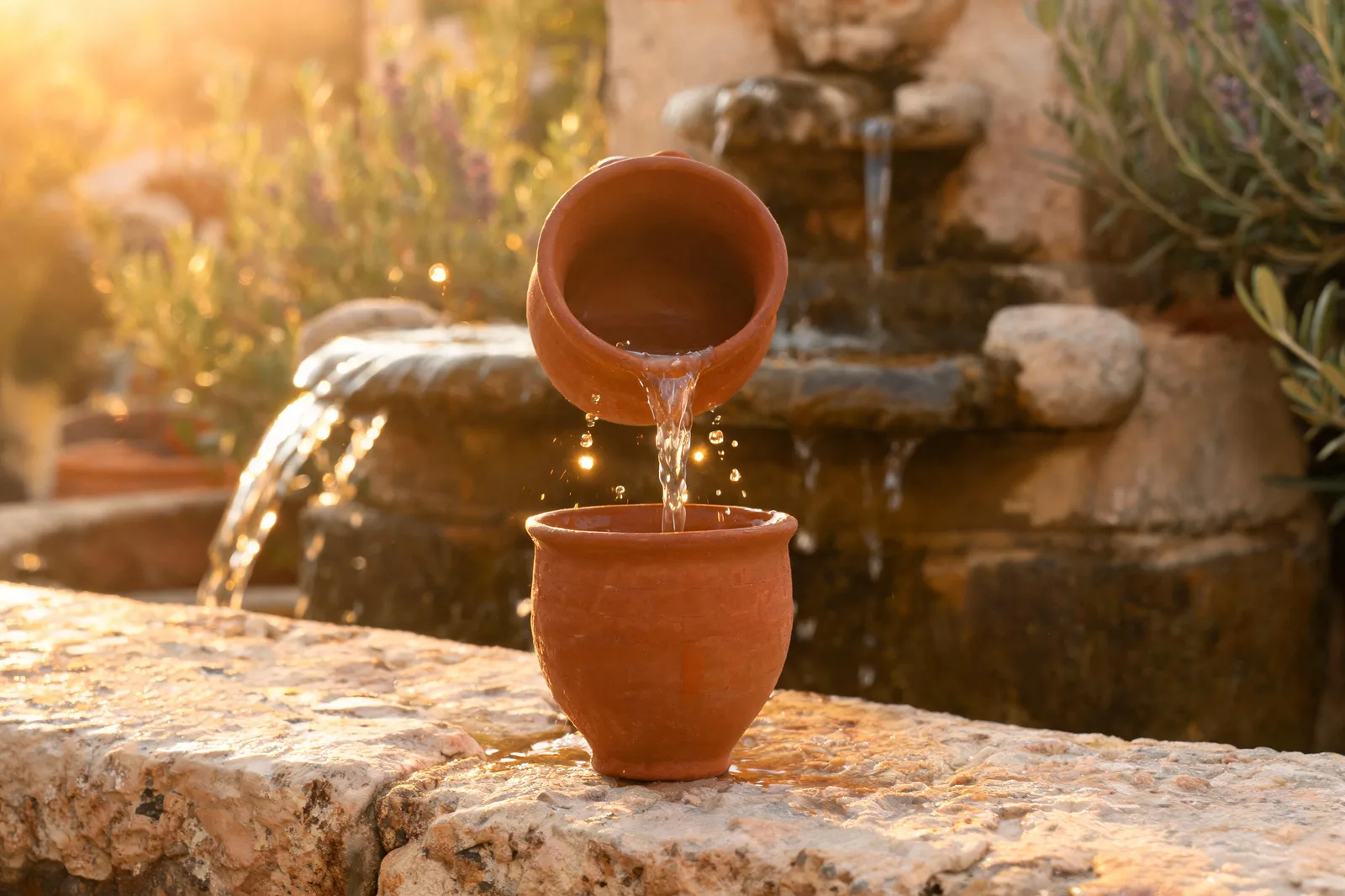
A two of cups reciprocity reading asks one question before any other: is this love moving in both directions? The Thoth Two of Cups — Love carries the title Love, but Crowley and Harris did not paint a single heart. They painted two vessels, a double lotus, and water passing between them. That image is the whole lesson. Love, on this card, is not a feeling one person has about another. It is an exchange that either flows or does not.
Why the Thoth deck shows an exchange, not a feeling
Earlier decks under the name "Two of Cups" show a man and a woman facing each other, often with a lion or a caduceus between them, borrowed from the Rider-Waite tradition. The Thoth version strips the figures away and keeps the structure: two cups, two streams of water, one circulation. Harris painted the card under Crowley's direction during the Book of Thoth years, when the deck's astrological attributions were fixed to Venus in Cancer — the planet of attraction placed in the sign of the home and the private self. The result is a card about what moves between two people, not about either one of them separately.
This matters for a reading because it changes the question a querent should bring. "Does this person love me?" asks about one side of the cup. "Is something moving between us?" asks about the whole picture — and the Two of Cups will only answer the second question honestly.
Reading exchange, not just attraction
A careful reader treats the Two of Cups as a diagnostic card, not a verdict. It describes a dynamic: giving and receiving in rough balance, warmth meeting warmth, one gesture answered by another. It does not describe outcomes, and it does not say who feels more. When it falls in a position about the past or the present, it usually means the exchange is already happening — texts answered, plans made together, affection returned in kind. When it falls in a position about the future, caution is needed: water that has not yet moved is only a possibility, and the card never promises it will.
Reversed or badly aspected, the Two of Cups does not mean "this person doesn't love you." It more often points to an exchange that has stalled — one cup pouring, the other not catching what is offered. That stall can come from timing, from fear, from circumstance, or simply from two people wanting different things at different speeds. The honest reading names the stall without naming its cause, because the cards cannot see inside another person's reasons, only the shape of what passes between two lives.
Reading it inside a spread, not alone
On its own, the Two of Cups is easy to read too sweetly. In context, it works best read against its neighbours. Paired with a card of effort or patience in a Celtic Cross, it describes a connection still being built rather than one already settled. Paired with a card of endings, it may describe an exchange that gave what it had to give and is now closing, which is its own kind of completion, not a failure. The A Relationship Spread That Shows Both Sides piece in this series goes further into reading both people's positions side by side; this card is often the hinge position in exactly that kind of layout, because it marks where two separate lines meet.
A reader should also resist turning this card into a timeline. "Soon," "within weeks," "by spring" are promises the cards do not make and a reciprocity reading should never make for them. What the Two of Cups offers is a present-tense description: this is what the exchange looks like right now. What the querent does with that description — wait, speak, step back — stays their decision.
What the card does not decide
No single card, however warm its symbolism, tells a querent whether to stay in a connection or to answer. The Two of Cups describes flow; it does not instruct. A reading that moves from "there is reciprocity here" to "so you should pursue this" has stopped reading the card and started making the querent's decision for them. The ethical line is simple: describe the exchange, name the uncertainty, and leave the choice exactly where it belongs.
This is also why the card rewards a second look rather than a single glance. Ask what is actually being exchanged — attention, time, vulnerability, plans — rather than assuming it is always romance. Tradition holds that the card can describe any mutual bond, including a renewed friendship or a reconciliation that is not romantic at all. The Lovers speaks to the choice inside a bond already named; the Two of Cups speaks earlier, to whether the bond is flowing at all.
A short practice for reading it honestly
Before interpreting the Two of Cups in a love position, name three things out loud: what is being given, what is being received, and whether those two match. If they do not match, say so plainly rather than softening the gap into a hopeful guess. If they do match, describe the balance without promising it will hold, because no card holds a future in place. This habit keeps a reciprocity reading useful rather than comforting for its own sake — comfort that does not reflect the water actually moving between two cups is not kindness, it is a kind of fog.
The Franz Bardon tradition treats every exchange of energy as requiring consent on both sides, as detailed in his Initiation into Hermetics; a tarot reading about love can borrow that same discipline. Describe the flow, not the destination, and let the querent carry the description back into their own life, where the real decision belongs.
FAQ
Does the Two of Cups mean mutual love? It means mutual exchange is present or forming. Whether that exchange is romantic, platonic, or something being renegotiated is for the surrounding cards and the querent's own context to show.
What does it mean reversed? Usually a stalled exchange — one side giving, the other not yet answering — rather than an absence of feeling. Context in the spread decides which.
Can this card predict a relationship's future? No single card predicts an outcome. It describes a present dynamic; what happens next depends on choices neither the card nor the reader can make for the querent.
How is the Thoth version different from older decks? Older decks show two human figures; Thoth shows two vessels and a current of water, shifting the focus from the people to the exchange between them.
Questions
Does the Two of Cups mean mutual love?
It means mutual exchange is present or forming. Whether that exchange is romantic, platonic, or being renegotiated is for the surrounding cards and the querent's context to show.
What does it mean reversed?
Usually a stalled exchange, one side giving and the other not yet answering, rather than an absence of feeling.
Can this card predict a relationship's future?
No single card predicts an outcome. It describes a present dynamic; what happens next depends on choices the card cannot make for the querent.
How is the Thoth version different from older decks?
Older decks show two human figures; Thoth shows two vessels and a current of water, shifting the focus from the people to the exchange between them.
This article talks about
You might also like
 Love
 Love
 Love
© 2026 TAROTS chat (tarots.chat). All rights reserved. No part of this article may be reproduced, distributed or adapted without the owner's written permission.
The Journal
 Wands
 Thoth Tarot
 Kabbalah
 Symbolism
 Kabbalah
 Symbolism
 Symbolism
 Symbolism
 Kabbalah