A Monthly Love Reading Ritual for Couples
by Redazione · 9 October 2026 · 5 min read

A couples tarot ritual works best as a check-in, not a verdict machine. Two people sitting down once a month to ask the cards how things are going is a very different practice from either partner asking privately whether the relationship will last. Done well, it becomes a habit of honest conversation with the cards as a prompt, not an oracle deciding the relationship's fate.
Why a monthly rhythm works better than a single reading
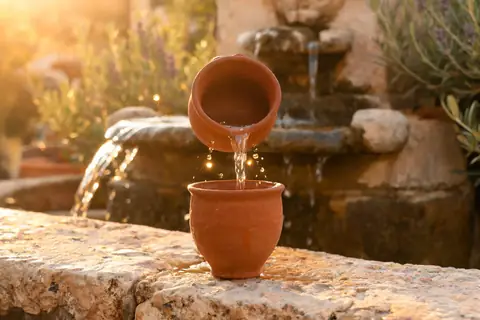
A single reading captures one moment; a monthly ritual captures a pattern. Two of Cups — Love appearing warm one month and strained the next tells a couple something a single snapshot cannot: that the exchange between them moves, as the The Two of Cups in Thoth: Love as Exchange piece earlier in this series describes, and that movement is worth tracking rather than panicking over any single low point. A monthly rhythm also keeps the ritual from becoming a crisis tool, reached for only when something feels wrong — which tends to make every reading feel like an accusation waiting to happen.
This closing piece follows the Friendship or Romance? Reading an Ambiguous Bond article earlier in this series, which read an undefined bond with patience rather than a forced label; a monthly ritual extends that same patience into a relationship already named, giving it room to be read honestly over time rather than judged in a single sitting.
The practice works best with a fixed, low-stakes cadence: same week each month, ten minutes, no scorekeeping. Couples who treat it as an argument-settling device tend to abandon it quickly, because no card resolves a disagreement neither partner is ready to have honestly.
A simple three-card layout for two people
Each partner draws one card for what they are bringing to the relationship that month, and the couple draws a third together for what the connection itself needs. This keeps the focus on contribution rather than blame: each person names their own card's meaning for their own side first, before either comments on the other's. The shared third card becomes a genuine conversation rather than a verdict pronounced by one partner over the other.
Four of Wands — Completion, Completion, in the shared position often marks a month of steady building — nothing dramatic, simply more foundation laid. Five of Wands — Strife, Strife, in the same position names friction worth naming directly rather than letting it simmer unaddressed until the next sitting. Neither reading should be treated as good or bad on its own; both are information a couple can actually use.
Rules that keep the ritual safe
A few boundaries protect the practice from becoming something sharper than intended. No reading should be used to win an argument already underway — if tension is active, wait until it has settled before reaching for the cards. No card should be treated as proof of fault; a difficult card describes a dynamic, not a verdict on which partner is to blame. And no one should read for the other partner without their presence and consent; a reading about a relationship done unilaterally, behind the other person's back, breaks the collaborative spirit the whole practice depends on.
Research on regular relationship check-ins consistently finds that steady, low-pressure conversation does more for a relationship's health than occasional high-stakes discussions, which is really what this ritual offers, with the cards simply giving two people a shared language to start from.
What grows from a year of these readings
Kept over months, this ritual becomes a kind of record: which cards recur, which positions tend to carry tension, which carry ease. A couple who notices the Five of Wands returning to the shared position every few months has learned something useful about a recurring friction point, independent of any single reading's meaning. That pattern, more than any one card, is the real value of doing this monthly rather than once.
What this ritual will not do
It will not resolve a disagreement neither partner is willing to address directly, and it will not substitute for an honest conversation when something serious is wrong. A card naming friction is an invitation to talk, not a replacement for the talking itself. Treated as a prompt rather than a verdict, the ritual earns its place in a relationship's rhythm; treated as an oracle, it quietly starts to replace the conversations it was meant to start.
FAQ
How long should a couples tarot ritual take? Ten to fifteen minutes is usually enough: one card each, one shared card, and a short conversation about what came up.
What if the shared card is upsetting? Treat it as a prompt to discuss the underlying issue calmly, not as a verdict. If tension is already high, wait before drawing.
Can one partner do this ritual alone for the relationship? It works far better with both partners present. A reading done unilaterally about someone who is not there loses the collaborative value the ritual depends on.
Does a difficult card mean the relationship is in trouble? Not on its own. A single reading describes a month's dynamic; a pattern across several months is more informative than any one card alone.
Questions
How long should a couples tarot ritual take?
Ten to fifteen minutes is usually enough: one card each, one shared card, and a short conversation about what came up.
What if the shared card is upsetting?
Treat it as a prompt to discuss the underlying issue calmly, not as a verdict. If tension is already high, wait before drawing.
Can one partner do this ritual alone for the relationship?
It works far better with both partners present. A reading done unilaterally about someone who is not there loses the collaborative value the ritual depends on.
Does a difficult card mean the relationship is in trouble?
Not on its own. A single reading describes a month's dynamic; a pattern across several months is more informative than any one card alone.
This article talks about
You might also like
 Love
 Love
 Love
© 2026 TAROTS chat (tarots.chat). All rights reserved. No part of this article may be reproduced, distributed or adapted without the owner's written permission.
The Journal
 Love
 Kabbalah
 Swords
 Kabbalah
 Kabbalah
 Symbolism
 Symbolism
 Kabbalah