The Qliphoth in the Golden Dawn Tradition
by Redazione · 9 October 2026 · 5 min read
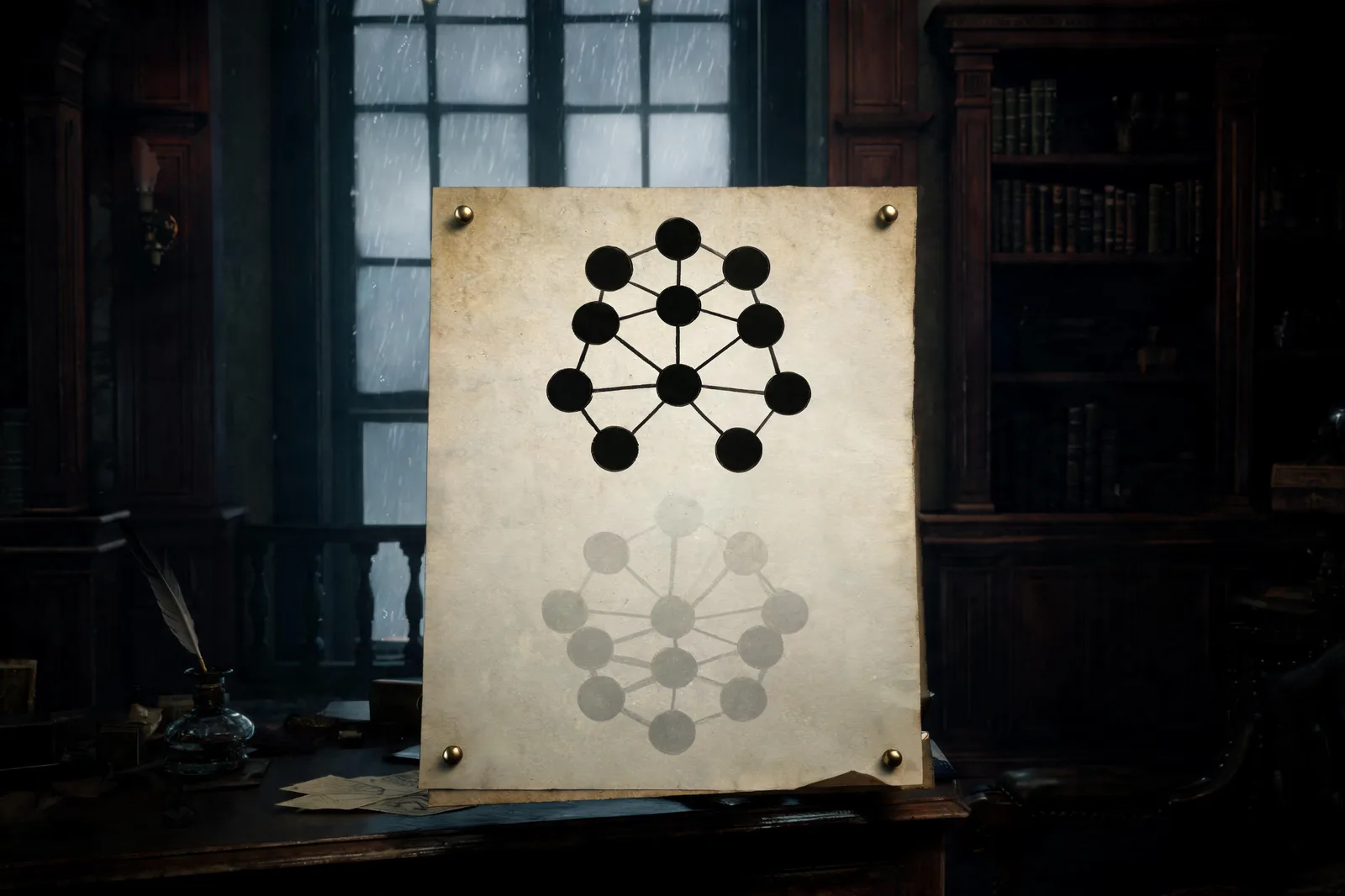
The Golden Dawn qliphoth system turned a quiet structural idea into a working part of ceremonial training, with named "evil sephiroth" assigned to specific grades and specific warnings. The shift from Luria's shells, discussed in What the Qliphoth Are: Shells in Lurianic Kabbalah, to the Golden Dawn's own system marks one of the most consequential translations in modern Western occultism.
MacGregor Mathers and the Christianized Qabalah
Samuel Liddell MacGregor Mathers, chief architect of the Order's curriculum, drew his Qabalah largely from Christian Cabalist sources filtered through earlier compilers rather than from direct study of Luria's Hebrew texts. His flashing tablets and knowledge-lecture papers gave students a tidy, symmetrical Tree with a tidy, symmetrical shadow beneath it: ten qliphoth matched one-to-one against the ten sefirot. That neatness was itself an innovation; nothing in Luria's own writing demands such a clean inverse structure.
Naming the shells in the Golden Dawn qliphoth system
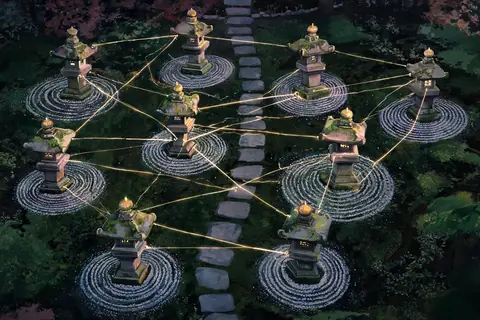
Luria described shattered vessels in fairly abstract terms. The Golden Dawn's papers instead gave each shell a name and a governing title, borrowed partly from older grimoire traditions and partly invented for the system's own symmetry: Thaumiel opposite Kether, Ghagiel opposite Chokmah, and so on down to Lilith opposite Malkuth. A later part of this series works through the full list in detail. The effect was to make the qliphoth legible as a map, something a student could study grade by grade rather than meditate on as pure theology.
A subject for advanced grades only
Crucially, the Order's own internal documents treated this material as advanced and cautionary, not as an invitation to practical work with the shells. Israel Regardie, who later published the Order's papers in full, preserved warnings that accompanied the qliphothic material: study it to understand the Tree's full structure, and to recognise unbalanced force, not to court it. That caution is easy to lose when the papers circulate stripped of their original context. Cheap paperback editions later reached a much wider readership than the Order itself ever had.
Unbalanced force, not literal demons
Golden Dawn teaching framed the qliphoth primarily as a psychological and symbolic category: unbalanced force, the sefirothic energies out of their proper proportion and relation. The Devil draws directly on this framing in Thoth-deck symbolism, representing bondage to matter and appetite rather than an external tempter. Reading the qliphoth this way keeps the material inside the Order's own stated purpose, diagnostic rather than invocatory, much closer to Luria's original intent than the later popular imagination suggests.
Why the symmetry mattered to a teaching order
A fraternal order built around initiation grades needs a structured curriculum. A Tree with a labeled shadow gave the Golden Dawn exactly that: a progression from outer order studies toward the inner, more demanding material historically associated with its upper grades. The qliphoth's place in that progression was pedagogical as much as metaphysical, a way to mark which students had earned the context to handle difficult material responsibly.
What changed, and what stayed the same
Mathers and his collaborators added names, correspondences and a stricter one-to-one symmetry that Luria's own system does not require. What stayed constant through both versions is the core idea: the qliphoth describe a structural absence, light's container without its content, rather than a populated underworld of independent beings. Readers curious about the wider curriculum this material sat inside can consult Israel Regardie's own account of the Order's papers, still the standard primary-adjacent source in English: Israel Regardie.
A common misreading to avoid
A frequent misunderstanding treats the Golden Dawn qliphoth as if the Order ran active rituals addressed to named shells, the way later popular writing sometimes implies. The surviving knowledge papers do not support that picture. They are lecture material: correspondences to memorize, warnings to internalize, and a reminder that unbalanced force shows up first in a student's own character before it shows up anywhere more dramatic. A member working through the grade structure met the qliphoth as an item on a syllabus, alongside planetary attributions and Hebrew letters, not as a target for evocation. Where later currents did turn toward active engagement with this material, they departed from the Order's own documented practice rather than extending it. Keeping this distinction clear matters for anyone reading the Golden Dawn's papers today: the system names the shadow so a student can recognise it in their own work, not so they can summon it. That distinction is exactly what the next part of this series tests against a far more elaborate twentieth-century expansion of the same material.
Toward Grant's later expansion
The Golden Dawn's relatively restrained, grade-gated treatment of the qliphoth did not stay restrained for long. A generation later, Kenneth Grant took this same material in a far more elaborate direction, building an entire cosmology of tunnels and gateways around it. The next part of this series follows that expansion and asks what it kept from the Order's original caution, and what it left behind.
Questions
Who built the Golden Dawn's qliphoth system?
Samuel Liddell MacGregor Mathers compiled the Order's Qabalistic curriculum, including its qliphothic correspondences, mainly from earlier Christian Cabalist sources.
Did the Golden Dawn teach the qliphoth to every member?
No. The material belonged to the Order's more advanced grade papers, framed as a caution for students who already understood the Tree's structure.
Are the Golden Dawn's ten shells the same as Luria's qliphoth?
They share the core idea of shells without light, but the Golden Dawn added names, titles and a strict one-to-one symmetry with the ten sefirot that Luria's own texts do not require.
How did the Golden Dawn understand the qliphoth psychologically?
Mainly as unbalanced force: sefirothic energies out of proportion, a diagnostic category rather than a population of independent beings.
This article talks about
You might also like
 Kabbalah
 Kabbalah
 Thoth Tarot
© 2026 TAROTS chat (tarots.chat). All rights reserved. No part of this article may be reproduced, distributed or adapted without the owner's written permission.
The Journal
 Love
 Thoth Tarot
 Symbolism
 Thoth Tarot
 Learn Tarot
 Kabbalah
 Symbolism
 Symbolism
 Kabbalah