Tarot Spreads for Shadow Work
A three-position spread and a four-card pattern spread for looking at what you usually avoid.
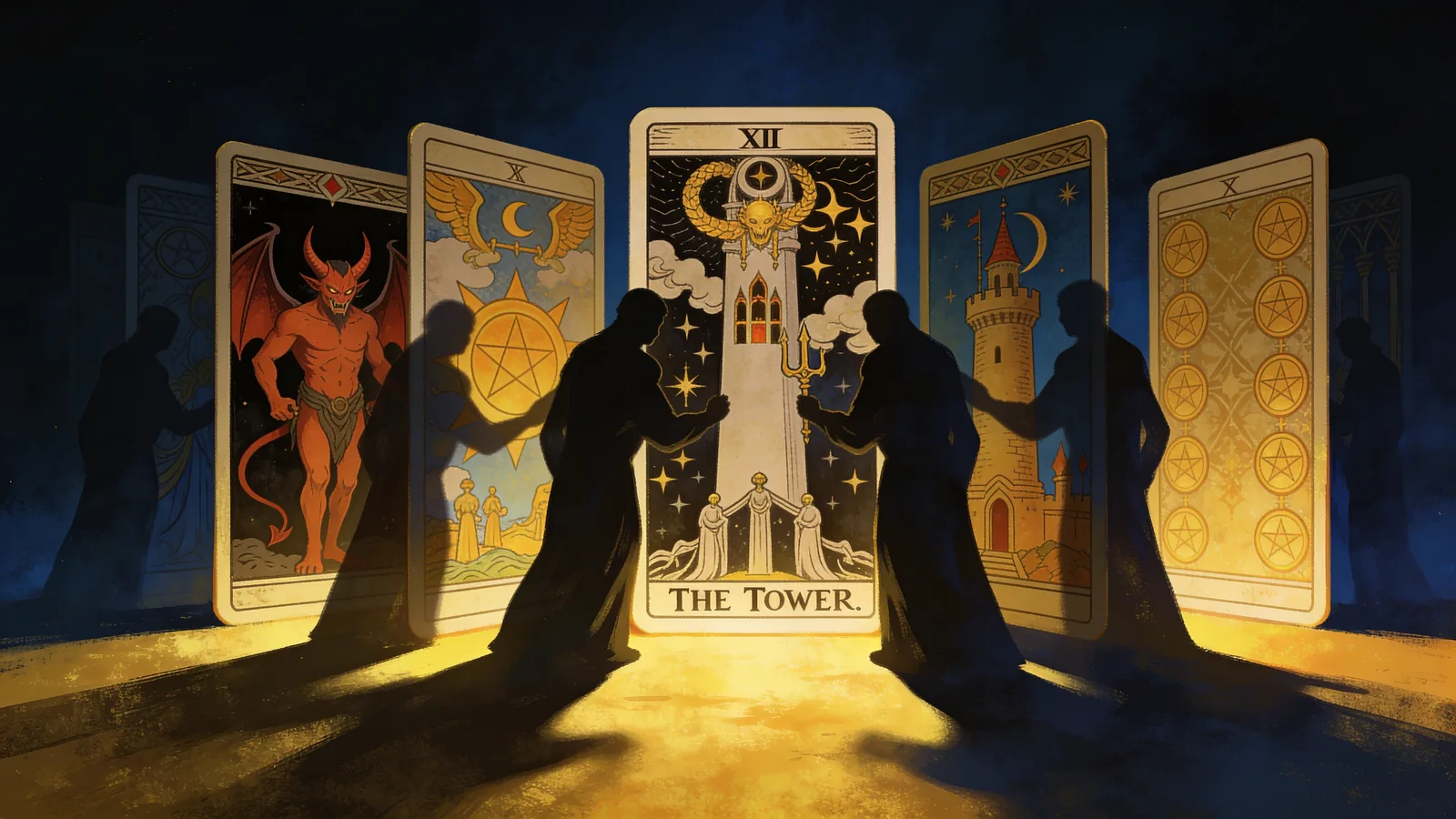
Shadow work is the practice of looking directly at the parts of yourself you'd rather not look at — the reactions you don't like, the patterns you keep repeating, the things you avoid admitting even to yourself. Good tarot spreads for shadow work don't soften that; they give the avoidance a specific shape to look at, one card at a time, instead of leaving it as a vague feeling you can keep pushing down.
Why tarot fits shadow work so well
A tarot spread forces specificity. Instead of a general resolution to "deal with my anger," a shadow-work draw asks you to sit with one card in one position and describe, out loud or on paper, exactly what it shows you. Cards that carry difficult material — The Devil, The Tower, Eight of Swords — Interference (Interference), Nine of Swords — Cruelty (Cruelty) — are not "bad" cards to fear in this context; they are the ones most likely to name the thing shadow work is actually for.
Tarot spreads for shadow work: a three-position spread
- What I show — the part of this pattern I let other people see.
- What I hide — the part I don't show, even to myself most days.
- What it's protecting — the older need or fear the hidden part is actually defending.
Draw one card per position using a plain Three cards layout, but read it with these three questions instead of Past/Present/Future. The third position is where most of the real work happens — a hidden part almost always exists to protect something, not just to cause trouble.
Using The Devil and The Tower without dread
The Devil in a shadow spread usually names a bondage that feels chosen — a habit, an avoidance, a comfort that has quietly become a cage. It is asking what you'd have to give up to be honestly free, and whether you actually want to. The Tower in this context is rarely punishment; it is the moment a structure built on avoidance becomes too heavy to keep standing, and reads more accurately as relief arriving in an uncomfortable shape than as disaster.
A four-card spread for a repeating pattern
If one theme keeps returning across several ordinary readings, a dedicated four-card spread can trace it:
- The pattern — what keeps happening.
- The trigger — what specifically sets it off.
- The payoff — what the pattern gives you, even though it costs you.
- The alternative — what a different response could look like, named plainly rather than idealized.
This spread works well after a period of journaling (see our guide on How to Journal Your Tarot Reading) has already surfaced a repeating theme worth examining more directly. Without that prior record, it is easy to mistake a single uncomfortable reading for a pattern; the four-card spread is most useful once you already have evidence, from your own notes, that something keeps recurring rather than a hunch that it might.
A caution worth stating plainly
Shadow work surfaces real material — old grief, real fear, sometimes trauma. A tarot spread is a prompt for reflection, not a substitute for therapy when the material that comes up is more than you can hold alone. the Jungian concept of the shadow is a reasonable starting point if you want the psychological framing the term "shadow work" actually comes from, alongside the tarot practice.
FAQ
What is a shadow work tarot spread? A spread designed to surface avoided or hidden parts of yourself, using specific cards and positions rather than a general prompt to "reflect."
Which tarot cards are best for shadow work? Cards that name difficult material directly — The Devil, The Tower, and Swords cards like Interference and Cruelty — tend to produce the most useful shadow-work readings, though any card can apply depending on the question.
Is shadow work tarot the same as therapy? No. It is a reflective practice that can surface material worth bringing to therapy, not a replacement for it, especially when what surfaces is significant.
How often should I do a shadow work reading? There's no fixed schedule — it works best when a specific pattern or feeling has already become noticeable, rather than on a routine timer.
Can I combine shadow work with regular tarot journaling? Yes, and it is one of the more effective combinations: journal your ordinary readings, then use a dedicated shadow spread when the same theme keeps recurring.
Frequently asked questions
What is a shadow work tarot spread?
A spread designed to surface avoided or hidden parts of yourself, using specific cards and positions rather than a general prompt to reflect.
Which tarot cards are best for shadow work?
Cards that name difficult material directly, such as The Devil, The Tower and Swords cards like Interference and Cruelty, tend to produce useful shadow-work readings.
Is shadow work tarot the same as therapy?
No, it is a reflective practice that can surface material worth bringing to therapy, not a replacement for it.
How often should I do a shadow work reading?
There is no fixed schedule; it works best when a specific pattern has already become noticeable.
Can I combine shadow work with regular tarot journaling?
Yes, journal your ordinary readings and use a dedicated shadow spread when the same theme keeps recurring.
This article talks about
 The Devil
 The Tower
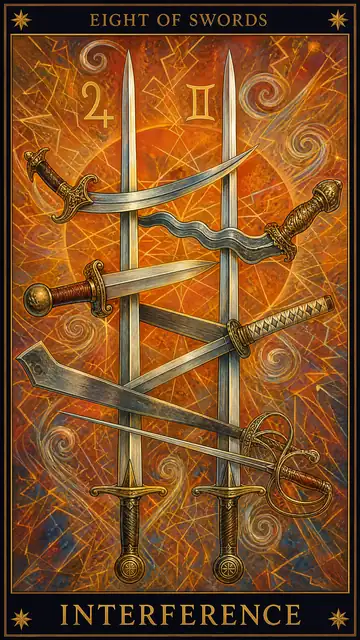 Eight of Swords — Interference
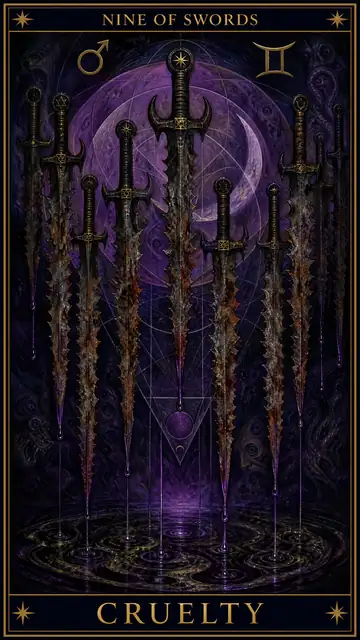 Nine of Swords — Cruelty
Share this article
You might also like

How to Read Tarot Cards: A Beginner's Guide
Suits, positions and one simple three-card spread to get you reading with real instinct, not memorized definitions.

Using Tarot for Relationship Problems
A mirror for your own part in a tension, never a verdict on someone else's heart.

How to Journal Your Tarot Reading
A simple template and habit that turns single spreads into a record you can actually learn from.