Tarot Tree of Life: A Qabalah Primer
The ten spheres, three columns and twenty-two paths that map the entire major arcana.
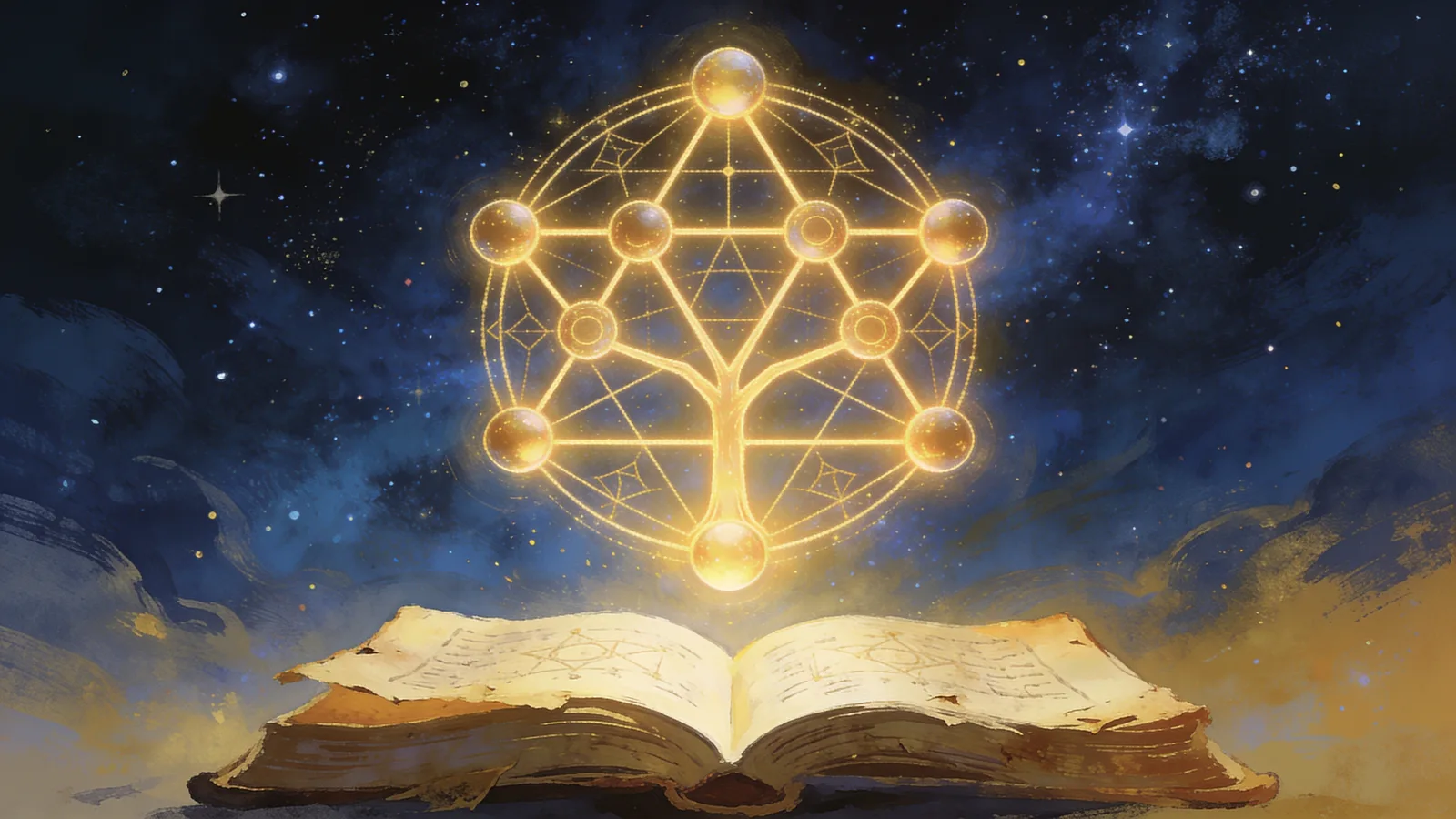
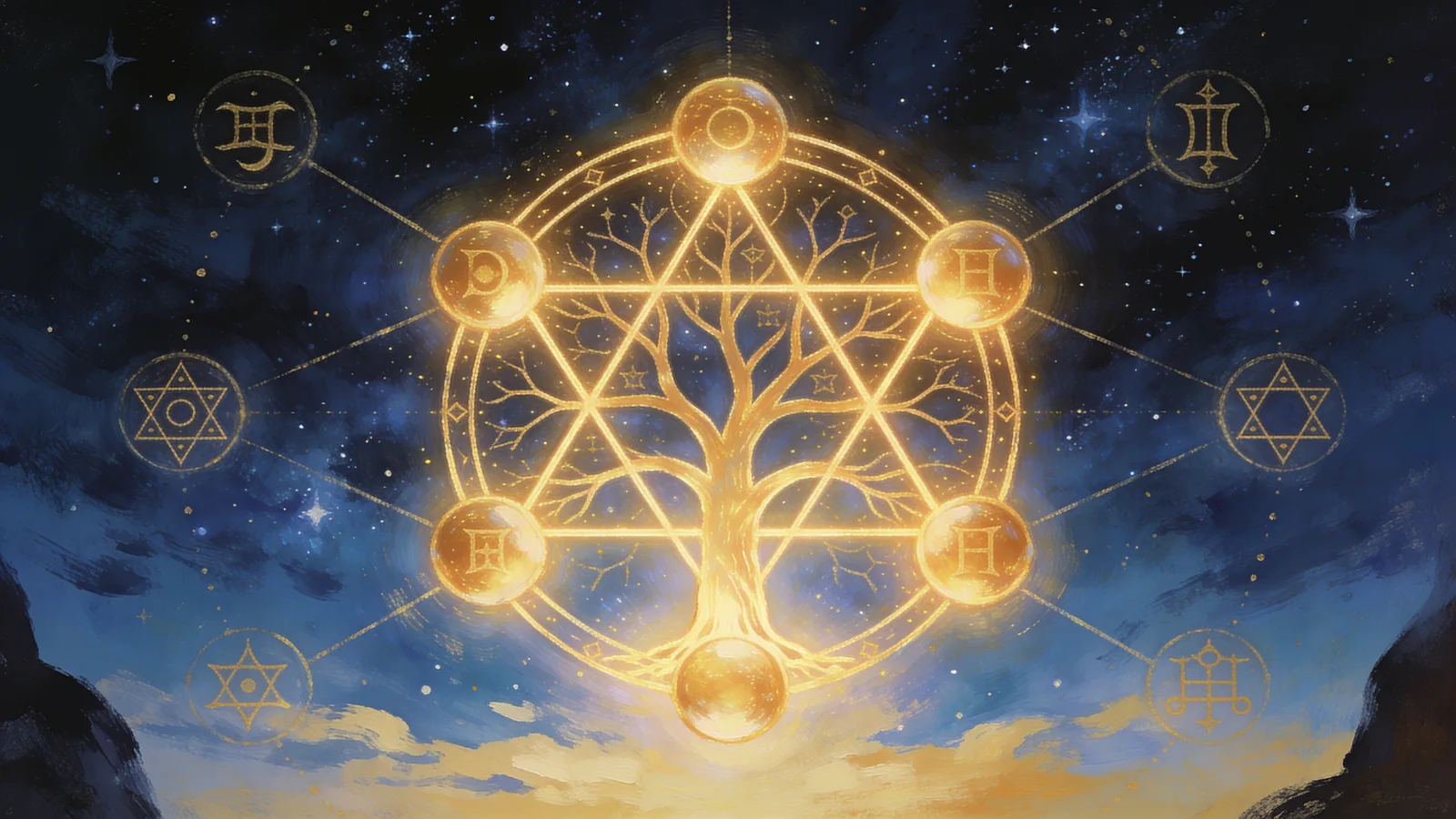
Ten circles, twenty-two connecting lines, three columns. The tarot Tree of Life is exactly this diagram — the Qabalistic map the Golden Dawn used to organize the entire major arcana. Where a separate look at Hebrew letters and astrology explains what each trump is attributed to, understanding the tarot Tree of Life is about the map itself: the ten stations a situation passes through on its way from pure potential to solid, everyday reality.
The ten Sephiroth, briefly
Read top to bottom, the ten spheres describe increasing manifestation:
- Kether (Crown) — pure will, before it has taken any shape at all.
- Chokmah (Wisdom) and Binah (Understanding) — the first split into force and form.
- Chesed (Mercy) and Geburah (Severity) — expansion and restriction, balancing each other.
- Tiphareth (Beauty) — the center of the whole diagram, where opposites reconcile.
- Netzach (Victory) and Hod (Splendour) — feeling and intellect.
- Yesod (Foundation) — the unconscious, the last stage before the physical.
- Malkuth (Kingdom) — the material world, where everything finally lands.
The three columns: force, form, and balance
The ten spheres sit in three vertical columns. The right column (Chokmah, Chesed, Netzach) is active, expansive force. The left column (Binah, Geburah, Hod) is restrictive, structuring form. The middle column (Kether, Tiphareth, Yesod, Malkuth) is where the two reconcile into something stable. A reading heavy in one column over another is telling you something about balance: too much unrestrained force, or too much restriction with nothing moving.
How the major arcana map onto the tarot Tree of Life paths
Each of the twenty-two connecting lines between the spheres corresponds to one major arcana trump. The Fool sits on the highest path, connecting Kether to Chokmah — pure potential just beginning to take a direction. The Universe sits on the lowest path, completing the descent into Malkuth — the point where an idea has finished becoming fully real. Between them, every other trump marks a specific transition: Death on the path between Netzach and Tiphareth, an ending that clears the way toward the center; The Devil on the path between Tiphareth and Hod, showing how a clear idea can curdle into a trap when intellect serves fear instead of clarity.
Reading a spread through the Tree of Life
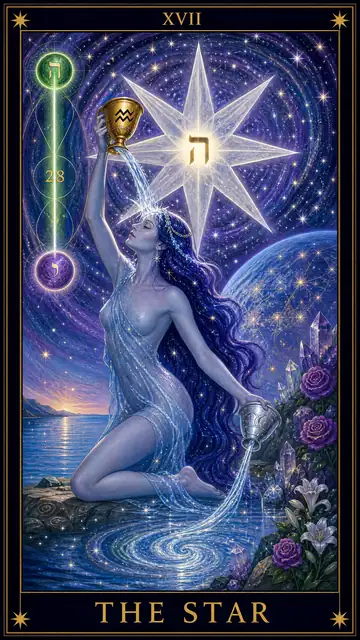
You don't need the full diagram in front of you for this to be useful. When a major arcana card appears in a reading, ask which pair of spheres it connects: is it a high path (Kether, Chokmah, Binah — still abstract, still becoming) or a low one (Yesod, Malkuth — already concrete, already affecting daily life)? The Star, on the path connecting Netzach and Yesod, describes hope stabilizing into something you can actually build on, closer to the practical end of the map than The Fool's pure beginning.
Using the tarot Tree of Life in practice, not just in theory
You don't have to draw the full diagram before every reading for this to be useful. Over time, noticing whether your spreads cluster near the top of the tree (abstract, still forming) or the bottom (concrete, already affecting daily life) becomes a fast, informal diagnostic — a habit closer to checking a compass than memorizing a map. A run of readings weighted toward Yesod and Malkuth is usually telling you that a period of reflection is over and it's time to act; a run weighted toward Kether and Chokmah is telling you the opposite, that something is still too early to force into a decision.
Where to go deeper
The tarot Tree of Life is a genuinely deep system, and no single article replaces years of study. The Golden Dawn's own historical overview of the Sephirot is a reasonable starting point for the Qabalistic side of the map, independent of tarot.
FAQ
What is the Tree of Life in tarot? A Qabalistic diagram of ten spheres (Sephiroth) connected by twenty-two paths, each path corresponding to one major arcana trump.
Do I need to study Qabalah to understand the Tree of Life in tarot? Not to start. Knowing that higher spheres represent abstract potential and lower ones represent concrete reality is enough to add a useful layer to a reading.
Which tarot card corresponds to the highest path on the Tree of Life? The Fool, on the path connecting Kether to Chokmah, representing pure potential before it has taken shape.
What do the three columns of the Tree of Life mean? The right column represents active, expansive force; the left column represents restrictive form; the middle column is where the two reconcile into something stable.
Is the Tree of Life specific to the Thoth tarot? No, the underlying Qabalistic system predates both decks, but the Thoth deck displays the correspondence more visibly than the Rider-Waite-Smith deck does.
Frequently asked questions
What is the Tree of Life in tarot?
A Qabalistic diagram of ten spheres connected by twenty-two paths, each path corresponding to one major arcana trump.
Do I need to study Qabalah to understand the Tree of Life in tarot?
Not to start. Knowing that higher spheres represent abstract potential and lower ones represent concrete reality is enough to add a useful layer.
Which tarot card corresponds to the highest path on the Tree of Life?
The Fool, on the path connecting Kether to Chokmah, representing pure potential before it has taken shape.
What do the three columns of the Tree of Life mean?
The right column represents active, expansive force, the left column restrictive form, and the middle column is where the two reconcile.
Is the Tree of Life specific to the Thoth tarot?
No, the underlying Qabalistic system predates both decks, but the Thoth deck displays the correspondence more visibly.
This article talks about
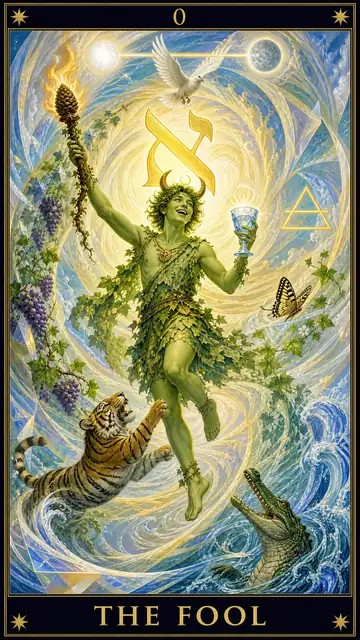 The Fool
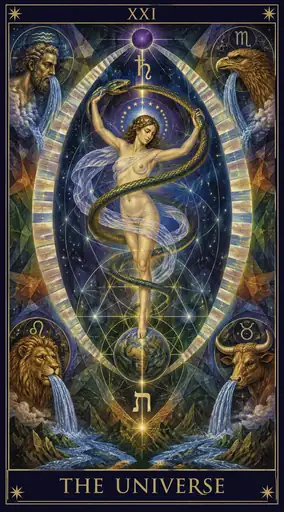 The Universe
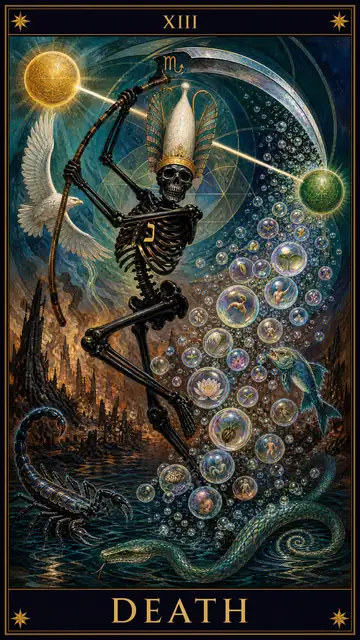 Death
Death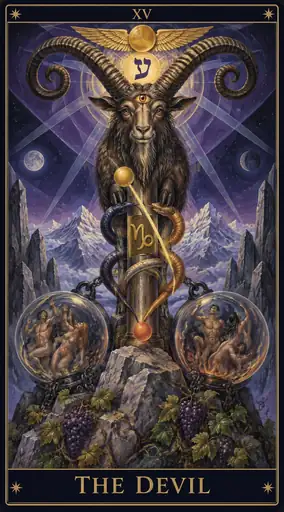 The Devil
 The Star
Share this article
You might also like
Golden Dawn Tarot Correspondences Explained
How Hebrew letters, astrology and the Tree of Life turn every Thoth tarot card into four systems read as one.
The Wheel of Fortune Tarot Card Meaning in the Thoth Deck
Kaph, Jupiter and path 21: why Crowley just calls it Fortune, and what changes when the wheel turns.
Thoth Tarot vs Rider-Waite: What's the Difference
Two decks built for two different jobs: one to be read at a glance, the other to be studied for years.