Annie Horniman: The Patron Who Paid for the Golden Dawn
A tea fortune behind Mathers's rituals and the Abbey Theatre
by Redazione · 9 October 2026 · 5 min read
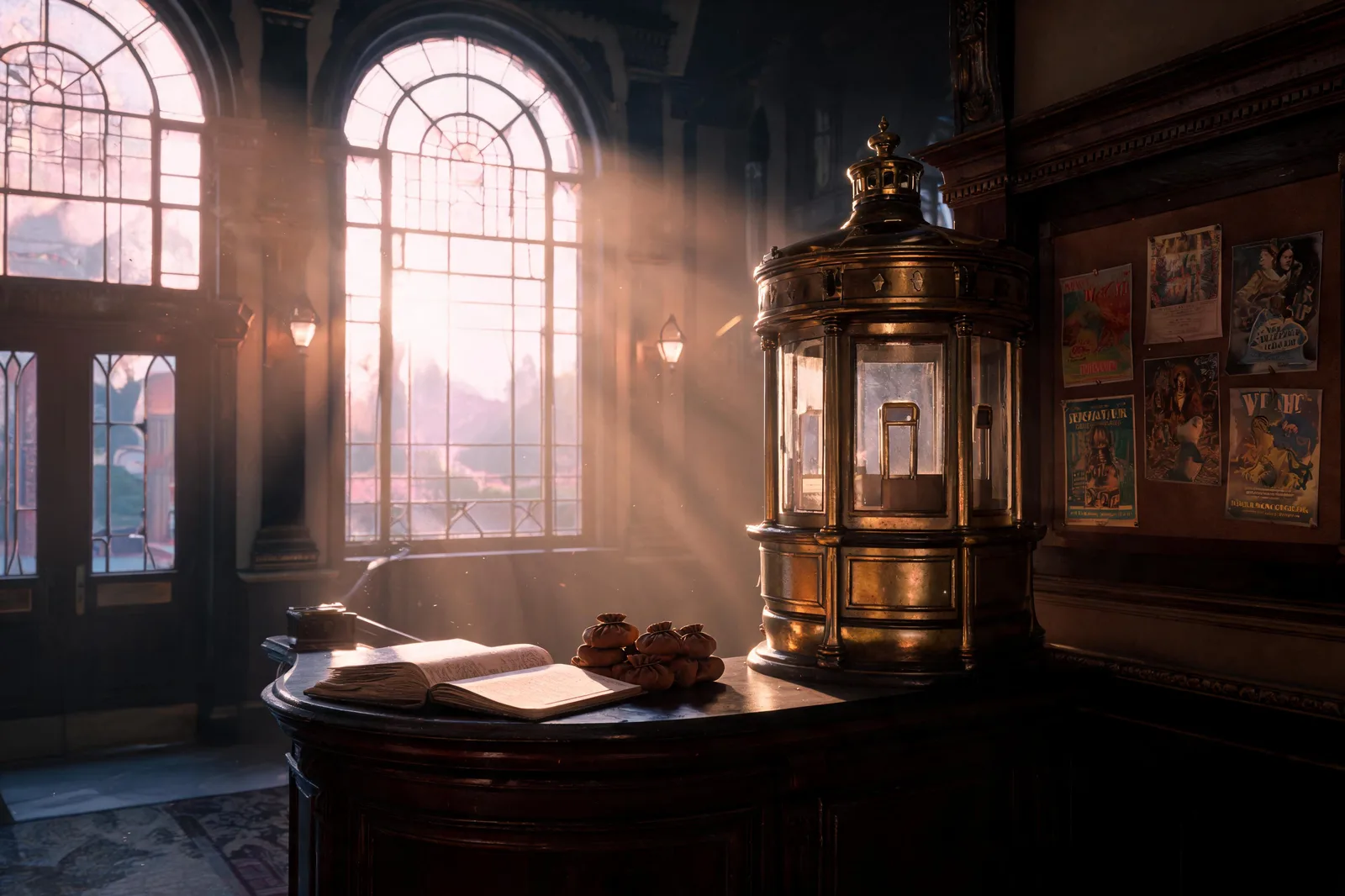
Annie Horniman paid more of the Golden Dawn's real bills than anyone else in the order, and her money shaped how long Mathers could keep leading it at all. Heir to a tea-trading fortune, she joined the order's Isis-Urania Temple in 1890, the same year as Florence Farr: Actress, Adept and Golden Dawn Leader, and for several years she was both a serious student of ritual and the person quietly covering its founder's rent.
Horniman was born in 1860 into a wealthy Quaker family whose fortune came from Horniman's Tea, still a recognisable brand today. Independent income meant she never needed a husband's permission or a salary to fund her interests, which was rare for a woman of her generation and let her travel and study on her own terms. She came to the Golden Dawn through the same milieu of educated Londoners curious about ceremonial magic that drew in Farr, Yeats and Mathers himself.
Funding Mathers in Paris
By the mid-1890s, Samuel Liddell Mathers had moved to Paris with his wife Moina, the subject of Moina Mathers and the Painted Golden Dawn Deck, and the order's London temple needed its founder to stay productive at a distance. Horniman provided him a private allowance for several years, in effect salarying the Golden Dawn's chief theorist so he could keep producing rituals, translations and correspondences rather than take ordinary work. Tradition holds that this arrangement let Mathers finish much of the written material later inherited by Waite, Crowley and, eventually, the correspondences behind the Thoth deck's structure.
The relationship did not survive contact with Mathers's temperament. By 1896 Horniman and Mathers had quarrelled badly enough that she stopped the allowance and was formally expelled from the order, an early sign of the authority disputes that would fracture the Golden Dawn completely a few years later. She kept her occult interests afterward but never again held the kind of founding-level influence she had enjoyed through her cheque book.
The patron behind the Abbey Theatre
Horniman's money found a second, better-documented outlet in the theatre. She had known W. B. Yeats through Golden Dawn circles, and when Yeats and Lady Gregory needed capital for an Irish national theatre, she provided it. Her funding helped establish Dublin's Abbey Theatre in 1904, giving Yeats and his collaborators a permanent home for the kind of symbolic, myth-driven drama that also ran through his occult interests. Ten of Disks — Wealth from the Thoth deck, the card of wealth, legacy and teams working toward a shared structure, is an apt enough image for what patronage like hers actually does: money becomes an institution that outlasts the person who wrote the cheque.
She went further than the Abbey. In 1908 she founded her own repertory company at the Gaiety Theatre in Manchester, one of the earliest in Britain to commission and stage new plays by local and regional writers on a regular, professional basis rather than touring commercial hits. The Manchester venture is sometimes credited as a founding moment of English regional repertory theatre, a legacy that has nothing to do with magic at all and everything to do with the same instinct that paid Mathers's rent: back serious work and let it run on its own terms.
Fortune, wealth and an independent life
Reading Horniman through the lens of Fortune, the Wheel of Fortune, is tempting but should be handled carefully. The card speaks to cycles of change and the turning of circumstance, themes that fit a life built on inherited wealth deployed into very different projects across four decades. It is an interpretive frame, not a documented one. There is no evidence she thought of her own career through that card, and nothing in the surviving record ties her personally to Thoth symbolism at all.
What is documented is her independence. She never married, managed her own finances throughout her life, and moved between occult London and professional theatre without treating either as more "serious" than the other. She died in 1937, having outlived most of the other founding-generation Golden Dawn members by decades, and having built something in Manchester that still gets cited in histories of British theatre.
Annie Horniman compared with Farr
It is worth setting Horniman beside Florence Farr directly, since the two women joined the same temple in the same year and left very different traces. Farr supplied labour: she led ceremonies, wrote papers on Egyptian religion, and administered the order day to day. Horniman supplied capital, and capital is harder to romanticise but no less necessary. A ritual order needs someone willing to run the meetings, and it also needs someone willing to pay for the rooms, the robes and the printing of its manuscripts. The Golden Dawn had both kinds of member, and its historians have tended to write more about the first kind than the second, which is one reason Horniman's name is less familiar today than it probably should be.
A patron's place in the order's story
Horniman rarely appears in accounts of Golden Dawn doctrine, because she was not primarily a theorist of ritual. She mattered differently. Without patrons willing to fund an unprofitable magical order, the system that eventually reached Crowley and Harris might have stalled on cost alone. Readers who study the Thoth deck's surviving correspondences are, in a small way, reading what Horniman's tea fortune helped keep in print long enough to be written down. For more on her life and the theatre she built, see the Annie Horniman entry on Wikipedia, which traces both halves of her career in more detail than any one article can.
Questions
How was Annie Horniman connected to the Golden Dawn?
She joined the Isis-Urania Temple in 1890 and for several years paid Samuel Liddell Mathers a private allowance that supported his ritual and translation work in Paris.
Why did Horniman leave the Golden Dawn?
She and Mathers quarrelled badly by 1896; she stopped funding him and was formally expelled, years before the wider order split apart.
What did Annie Horniman do after leaving the order?
She became a major theatre patron, funding Dublin's Abbey Theatre in 1904 and founding her own repertory company at Manchester's Gaiety Theatre in 1908.
Did Horniman write about tarot or Golden Dawn doctrine?
No surviving writings tie her personally to tarot symbolism; her documented importance is financial and organisational rather than doctrinal.
This article talks about
You might also like
 Thoth Tarot
 Thoth Tarot
 Thoth Tarot
© 2026 TAROTS chat (tarots.chat). All rights reserved. No part of this article may be reproduced, distributed or adapted without the owner's written permission.
The Journal
 Kabbalah
 Kabbalah
 Wands
 Wands
 Kabbalah
 Symbolism
 Symbolism
 Symbolism
 Kabbalah