Kabbalah and Christian Cabala: Two Different Traditions
by Redazione · 9 October 2026 · 4 min read
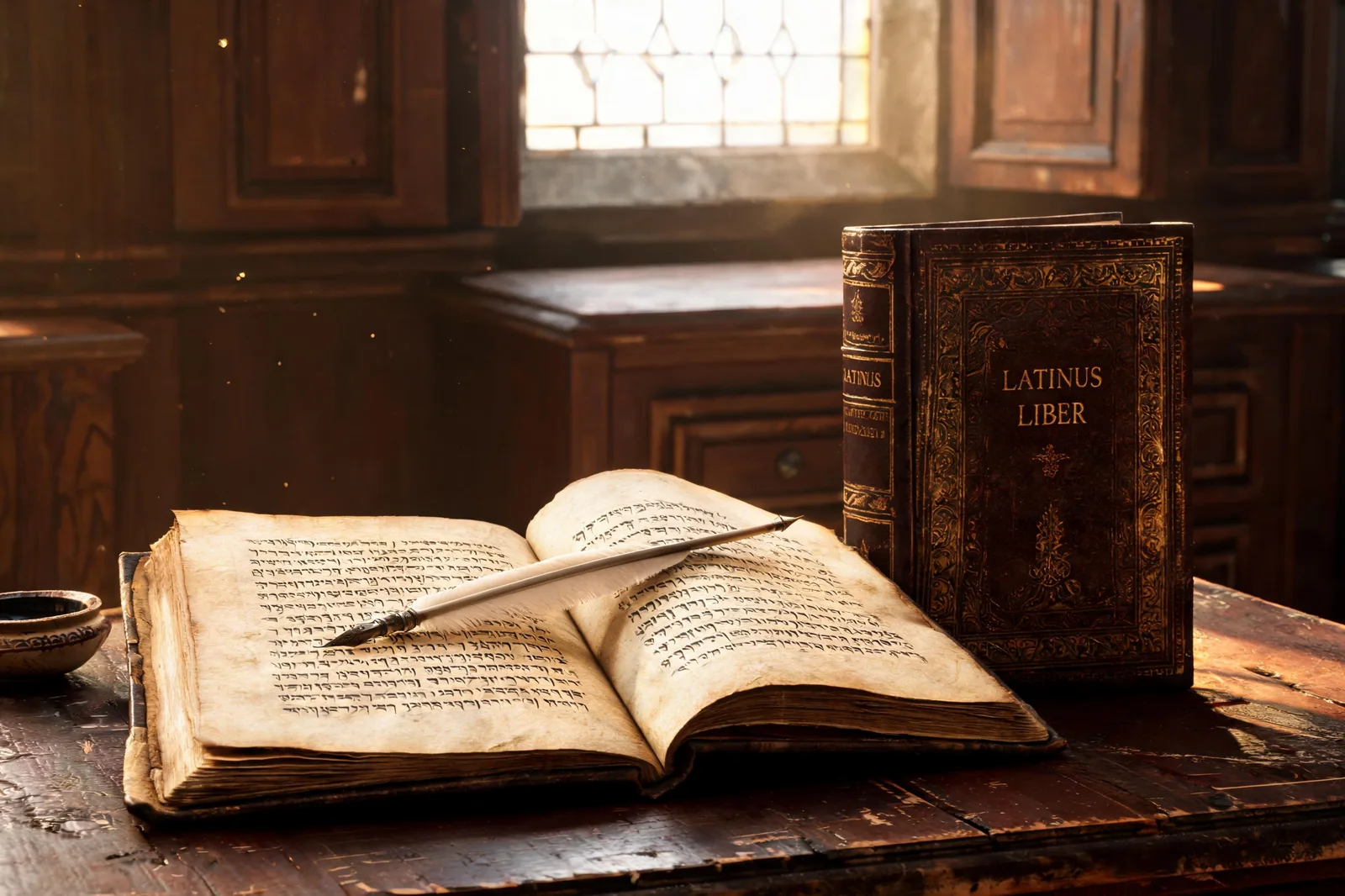
Christian Cabala is not Kabbalah. The two share a Hebrew root and a handful of words, but they are different traditions with different aims. Kabbalah is a living current inside Judaism, built on Hebrew text, Hebrew prayer, and centuries of rabbinic argument. Christian Cabala — the spelling with a C marks the difference in most scholarship — is a Renaissance-era borrowing, reshaped by Christian thinkers to fit their own theology, and later folded into the Western esoteric current that gave the tarot its occult "Cabala." This article opens a short series tracing that borrowing honestly, step by step.
A tradition with Hebrew roots
Kabbalah began inside Jewish communities, mostly in Provence and then Spain, around the twelfth and thirteenth centuries, though its practitioners traced its ideas back much further. It answers Jewish questions: how the infinite Ein Sof relates to a created world, how the sefirot structure that relation, how a Jew's daily practice — prayer, study, the commandments — can mend what tradition calls a broken world. Ein Sof: The Limitless Before the First Card looks at the first of those ideas. Adam Kadmon: The Primordial Human on the Tree looks at how the human form maps onto that structure. Both remain Jewish texts read by Jewish communities, with their own commentators, disputes, and living practice today.
What changed in the Renaissance
In the late fifteenth century, a handful of Christian scholars in Italy encountered Hebrew Kabbalistic texts, often through Jewish teachers hired for the purpose, and read them as confirmation of Christian doctrine. They proposed that the sefirot prefigured the Trinity, that Hebrew letter combinations pointed to Christ, that Kabbalah was really a hidden Christian revelation entrusted first to Moses and then to the Jews as caretakers. This was a reinterpretation, not a continuation. It used Jewish sources for a non-Jewish argument, and it did so without most Jewish communities' involvement or consent. Scholars today generally call this current Christian Cabala to keep it distinct from Kabbalah proper.
From Christian Cabala to the occult current
Christian Cabala did not stay inside theology. Over the following centuries it merged with Hermeticism, alchemy, and ceremonial magic into a broader Western esoteric current. By the nineteenth century, French and British occultists — none of them trained in Jewish sources — had built an entire system pairing the twenty-two Hebrew letters with the twenty-two trump cards of the tarot, and mapping the sefirot onto a diagram they called the Tree of Life. This is the "Cabala" most tarot readers meet today: thoroughly Western, thoroughly esoteric, and several steps removed from the Jewish tradition it borrowed from. The Magus carries one of the clearest examples, its Hebrew letter attribution a Golden Dawn invention rather than an inherited Jewish reading.
Why the distinction matters for a reader
None of this makes the tarot's symbolic use of Hebrew letters worthless as a study tool. Plenty of thoughtful readers find the Tree of Life diagram useful for organizing the trumps. But calling it "Kabbalah" without qualification blurs a living religious tradition with a system built four centuries later by people outside it. A respectful reader can hold both facts at once: the occult Cabala is a real, coherent, centuries-old current worth studying on its own terms, and it is not the same thing as the Judaism it borrowed its vocabulary from. Being plain about that is not a technicality. It is the difference between appreciating a tradition and quietly erasing it.
Reading the tarot's Hebrew letters honestly
A useful habit, going forward in this series, is to name sources. When a correspondence between a trump and a Hebrew letter comes from the Hermetic Order of the Golden Dawn or from Éliphas Lévi, say so, rather than attributing it to "the Kabbalah" in general. When a Jewish source — the Zohar, the Sefer Yetzirah, a specific rabbinic commentator — is actually being discussed, name that too, and keep its context. The Zohar and the Imagery of the Major Arcana does this for the Zohar's imagery specifically. The next article in this series turns to one of Christian Cabala's founding figures, Giovanni Pico della Mirandola, whose theses in 1486 set much of this borrowing in motion. For general background on the broader field, the Kabbalah entry on Wikipedia is a sound starting point, distinguishing the Jewish tradition from its later Christian and occult adaptations.
Tarot study benefits from this kind of care. A Three cards reading does not need an invented Kabbalistic pedigree to say something useful; it needs an honest account of where its symbols actually come from. That honesty is this series' guiding rule.
Questions
Is Christian Cabala the same as Jewish Kabbalah?
No. Christian Cabala is a Renaissance-era Christian reinterpretation of Jewish Kabbalistic sources, built to support Christian theology. Kabbalah itself remains a living Jewish tradition with its own scholars and practice.
Why do tarot books talk about Kabbalah?
Most tarot correspondences with Hebrew letters and the Tree of Life come from nineteenth-century Western occultists, not from Jewish tradition directly. Tradition holds that this current is better called the occult Cabala.
When did Christian Cabala begin?
It is usually traced to the late fifteenth century in Italy, when Christian scholars began studying Hebrew Kabbalistic texts and reading them through a Christian theological lens.
Does using Hebrew letters in tarot study disrespect Judaism?
It need not, if the source of each correspondence is named honestly. Problems arise when occult systems are presented as Kabbalah itself rather than as a later, separate borrowing.
This article talks about
You might also like
 Kabbalah
 Kabbalah
 Kabbalah
© 2026 TAROTS chat (tarots.chat). All rights reserved. No part of this article may be reproduced, distributed or adapted without the owner's written permission.
The Journal
From the Journal
Chosen for this page
 Major Arcana
The Death Tarot Card Meaning in the Thoth Deck: A Complete Guide
7 min read
More in Major Arcana Relationships
 Symbolism
 Spirituality
 Symbolism
 Symbolism
 Symbolism
 Symbolism
 Kabbalah