Moina Mathers, Sister of Henri Bergson
by Redazione · 9 October 2026 · 5 min read
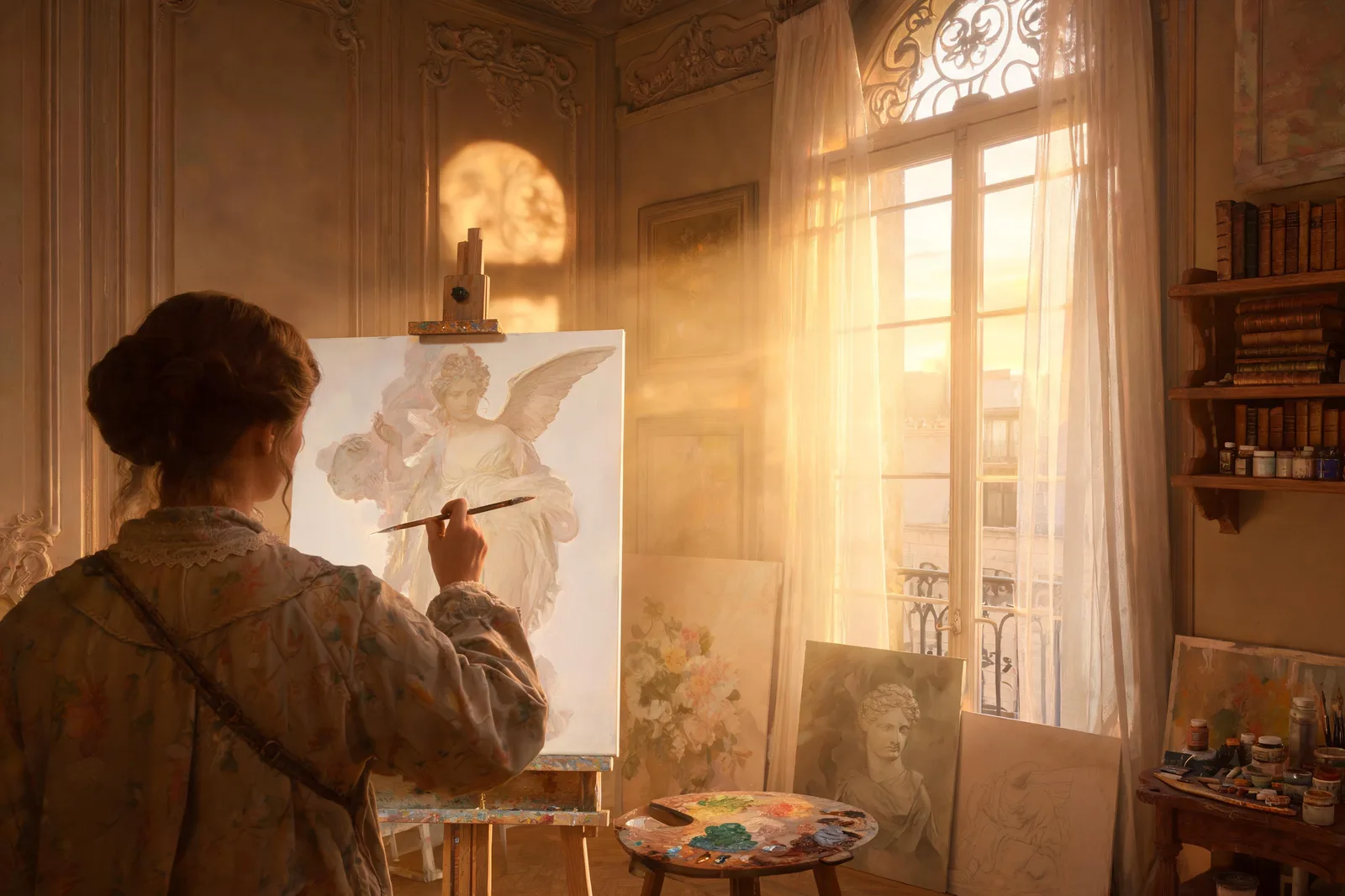
Two careers from one London childhood
The Moina Mathers Bergson connection is the kind of fact that makes tarot historians do a double take the first time they hear it: the woman who painted the Golden Dawn's original teaching deck was the sister of Henri Bergson, the philosopher who later won the Nobel Prize in Literature. Born Mina Bergson in 1865 to a Polish-Jewish composer father and an English mother, she grew up in a household that produced one sibling who reshaped European philosophy around intuition and duration, and another who spent her adult life designing ritual, painting symbolic cards and performing dramatic Egyptian-themed ceremonies in Paris. Nobody plans a family like that; it simply happened.
An artist first, an occultist second
Before any of the magic, Mina trained seriously as a painter at the Slade School of Art in London, one of relatively few women pursuing formal art education there at the time. That training mattered later: when the Hermetic Order of the Golden Dawn needed its teaching tarot illustrated, before any version reached a wider audience the way Moina Mathers and the Painted Golden Dawn Deck describes in more detail, it was her trained hand that produced it, not an amateur sketch by someone simply enthusiastic about symbolism. She brought real technical skill to a deck meant for internal instruction rather than sale, which is part of why it reads as considered artwork rather than devotional doodling.
A new name for a new life
She married Samuel Liddell MacGregor Mathers, one of the order's founding figures alongside the circle covered in Mathers, Westcott and Woodman: Who Built the Golden Dawn Tarot, and at his suggestion adopted the name Moina, a choice tradition holds was meant to sound more fittingly mystical than her birth name. Name changes were common currency in occult circles of the period, badges of a new identity assumed alongside initiation, and Moina's switch reads as consistent with that pattern rather than unusual for its own sake. What is unusual is that her brother kept the Bergson name straight into academic respectability and a Nobel medal, while she walked in the opposite direction, deeper into ceremonial magic, psychic work and symbolic art under a name of her own choosing.
Two very different relationships with intuition
There is a thread worth noting, carefully, between the siblings without overstating it. Henri Bergson built a philosophical career partly around intuition as a distinct way of knowing, separate from pure intellectual analysis. Moina spent her working life inside a tradition that treated symbol, vision and ritual experience as valid routes to understanding the world. Whether the two ever discussed this overlap directly is not something the record settles, and no letter or interview confirms a direct influence running either way. The parallel is suggestive rather than proven, best offered as an interesting resonance rather than a causal claim.
Life after the order split
Moina Mathers remained active in esoteric circles well after the Golden Dawn's well-documented internal fractures, helping steer the Alpha et Omega temple that carried the order's teaching forward under new management once the original structure broke apart. She continued painting, continued ceremonial work, including public Egyptian-themed rites in Paris that drew real audiences, and remained a visible figure in occult London and Paris until her death in 1928, a year after her brother's Nobel win made the Bergson name internationally famous for an entirely different kind of achievement. is as good a card as any to picture her by: trained, composed, working quietly behind a veil of ritual authority that her brother's academic world never had to perform.
Why the family link still surprises people
Part of the fun in the Moina Mathers Bergson story is simply how separated the two worlds feel from each other today. Philosophy departments rarely mention the occultist sister; tarot histories rarely dwell long on the Nobel laureate brother. Put side by side, though, they are a tidy reminder that the late nineteenth century's intellectual and occult circles were not as distant from each other as modern disciplinary boundaries suggest: the same Paris that hosted Bergson's lectures at the Collège de France also hosted his sister's ceremonial rites, sometimes within a short walk of each other, two very different answers to the same era's appetite for meaning beyond the strictly material.
A sibling rivalry nobody recorded
No surviving letter documents the two comparing notes on their very different public lives, and it would be tempting, but unsupported, to imagine friction between a sober philosopher and his occultist sister. What little record exists suggests instead a family that simply let its members pursue radically different paths without much public comment either way, which may be the least dramatic and most plausible version of events. It is also, in its own quiet way, the funniest part of the anecdote: two siblings who each became genuinely influential in their own very different fields, and apparently felt no need to make a public spectacle of the contrast between them.
Readers wanting the fuller biography can check the Moina Mathers Wikipedia entry, which documents both her Golden Dawn career and her family background.
Questions
Was Moina Mathers really Henri Bergson's sister?
Yes. She was born Mina Bergson in 1865, sister of the philosopher Henri Bergson, who later won the Nobel Prize in Literature.
What was Moina Mathers' role in the Golden Dawn?
She was a founding-era member and trained artist who painted the order's original teaching tarot, and she later helped lead the Alpha et Omega temple after the order split.
Why did she change her name from Mina to Moina?
Tradition holds that her husband, Samuel Liddell MacGregor Mathers, suggested the change to suit her new mystical identity, a common practice among occultists of the period.
Did Henri Bergson and Moina Mathers stay in contact?
No detailed surviving record confirms the nature of their relationship in adulthood. There is no documented evidence of collaboration or public comment between them on each other's very different careers.
You might also like
 Tarot Journal
 Tarot Journal
 Tarot Journal
© 2026 TAROTS chat (tarots.chat). All rights reserved. No part of this article may be reproduced, distributed or adapted without the owner's written permission.
The Journal
 Kabbalah
 Symbolism
 Major Arcana
 Disks
 Kabbalah
 Symbolism
 Symbolism
 Kabbalah