How to Read Tarot Cards: A Beginner's Guide
Suits, positions and one simple three-card spread to get you reading with real instinct, not memorized definitions.
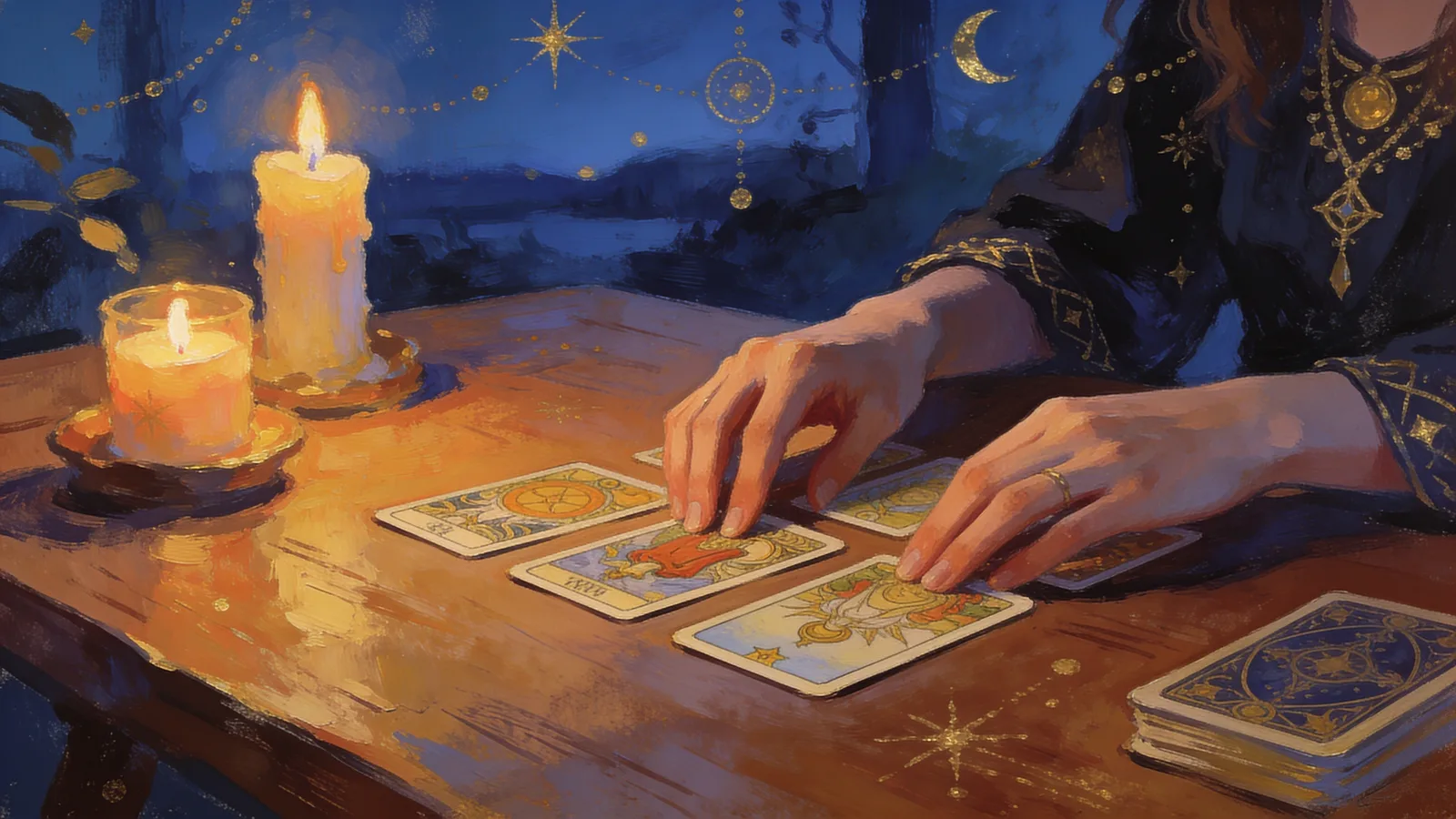
A deck of seventy-eight cards looks intimidating the first time you spread it out on a table. Learning how to read tarot cards is less about memorizing seventy-eight definitions and more about learning a small number of patterns — suits, numbers, court ranks, and how a position in a spread changes what a card is talking about. Once those patterns click, every new card is a variation on something you already know.
Start with the structure, not the memorization
The deck splits cleanly into two halves. The major arcana (twenty-two cards, The Fool through The Universe) describes big, slow-moving themes: turning points, character, long arcs. The minor arcana (fifty-six cards across four suits) describes daily texture: a conversation, a decision, a stretch of effort. If you read nothing else before your first spread, read this: a reading full of major arcana cards is telling you something structural is happening in your life; a reading full of minors is telling you it is an ordinary week that still deserves attention.
Learn the four suits as four kinds of energy
- Wands — action, will, ambition. A card like Seven of Wands — Valour (Valour) is about holding your ground under pressure.
- Cups — feeling, relationship, imagination. Two of Cups — Love (Love) is straightforward: a real connection, mutual and current.
- Swords — thought, conflict, communication. Eight of Swords — Interference (Interference) is a mind that feels trapped by its own story more than by real circumstances.
- Disks — body, money, work, the material world. Six of Disks — Success (Success) is resources moving where they are needed.
Learn the suit's territory first. A beginner who can say "this is a Cups question, so it's about a feeling or a relationship" before naming the exact card is already reading tarot.
Read the position, not just the card
The same card means something different depending on where it lands. In a Three cards Past/Present/ Future layout, The Tower in the Past position describes a collapse that already happened and is shaping the present; the same card in the Future position is a warning to loosen your grip on something before it is forced out of your hands. This is the single habit that separates a flat, memorized reading from one that actually answers the question that was asked.
How to read tarot cards: a simple first reading, step by step
- Ask a real, specific question — "What do I need to understand about this job change?" works better than "What does my future hold?"
- Shuffle with the question in mind, then draw three cards for a Three cards spread: Past, Present, Future.
- Read each card's suit and number first, then its position, then let the three cards form one sentence together rather than three separate ones.
- Write down what you noticed before you look anything up — your first instinct is data, not noise.
How reference material actually helps
Card meaning glossaries — Biddy Tarot's card library is a well-known one — are useful for checking your instinct against a longer tradition, not for replacing it. Read the glossary entry after you have already said what you think the card means in that position — you will remember it, instead of just borrowing it.
What trips beginners up
Two habits slow people down more than anything else. The first is treating the glossary as gospel and overriding your own read of the position — a "positive" card in a position asking about a problem is not secretly good news, it usually means the problem is smaller or more solvable than it feels. The second is reading every card in isolation instead of as part of one sentence with its neighbors: three cards drawn together are answering one question, not offering three unrelated observations.
FAQ
How long does it take to learn to read tarot cards? Most people can run a coherent three-card reading within a few sessions once they know the four suits and the difference between major and minor arcana; real fluency across all seventy-eight cards takes months of regular practice.
Do I need to memorize all 78 cards before I start reading? No. Start with the suits and the major/minor split, then build card-by-card knowledge through practice, not before it.
What's the easiest first spread to learn? A three-card Past/Present/Future spread. It is small enough to read in one sitting and still teaches you how position changes meaning.
Does the deck matter for learning to read tarot? It changes the learning curve more than the outcome. A pictorial deck like Rider-Waite-Smith is faster to start with; a symbolic deck like Thoth rewards slower study with deeper correspondences.
Can an AI-guided reading help me learn faster? It can, if it explains why a card fits its position instead of only naming a meaning — that explanation is exactly the habit a beginner is trying to build, and seeing it modeled consistently across many readings speeds up the moment when you can do it yourself without any glossary at all.
Frequently asked questions
How long does it take to learn to read tarot cards?
Most people can run a coherent three-card reading within a few sessions once they know the four suits and the major/minor split; real fluency takes months of regular practice.
Do I need to memorize all 78 cards before I start reading?
No. Start with the suits and the major/minor split, then build card-by-card knowledge through practice, not before it.
What's the easiest first spread to learn?
A three-card Past, Present, Future spread. It is small enough to read in one sitting and still teaches how position changes meaning.
Does the deck matter for learning to read tarot?
It changes the learning curve more than the outcome. A pictorial deck is faster to start with; a symbolic deck rewards slower study.
Can an AI-guided reading help me learn faster?
It can, if it explains why a card fits its position instead of only naming a meaning.
This article talks about
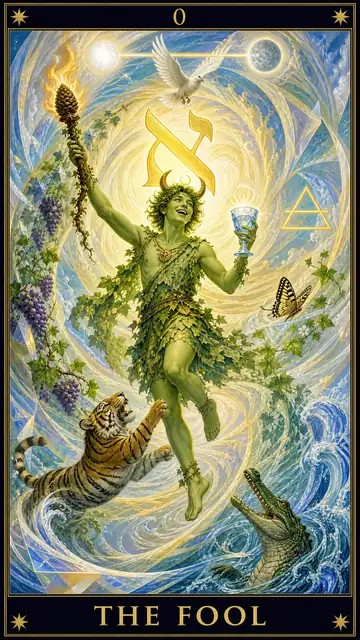 The Fool
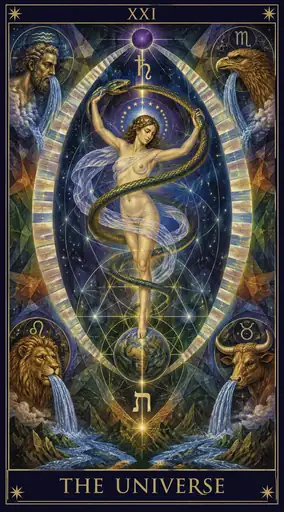 The Universe
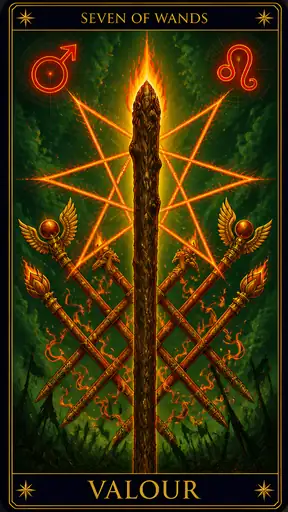 Seven of Wands — Valour
 Two of Cups — Love
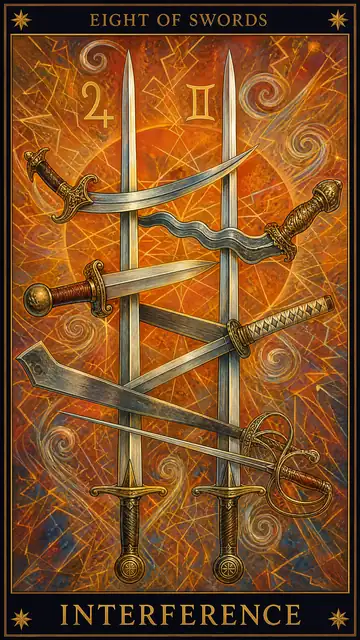 Eight of Swords — Interference
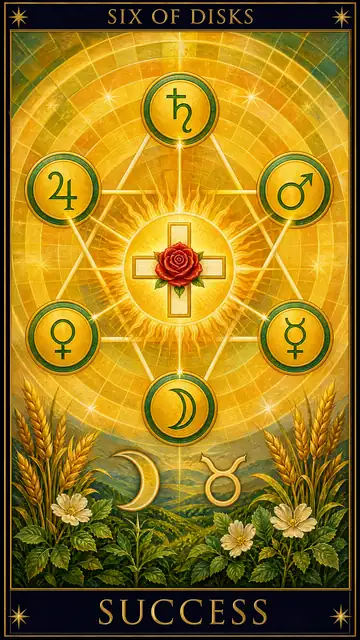 Six of Disks — Success
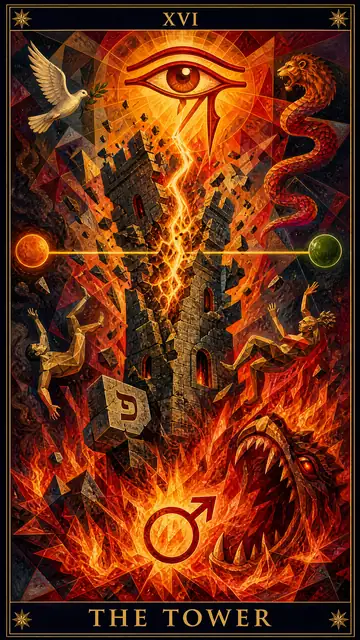 The Tower
Share this article
You might also like
Using Tarot for Relationship Problems
A mirror for your own part in a tension, never a verdict on someone else's heart.
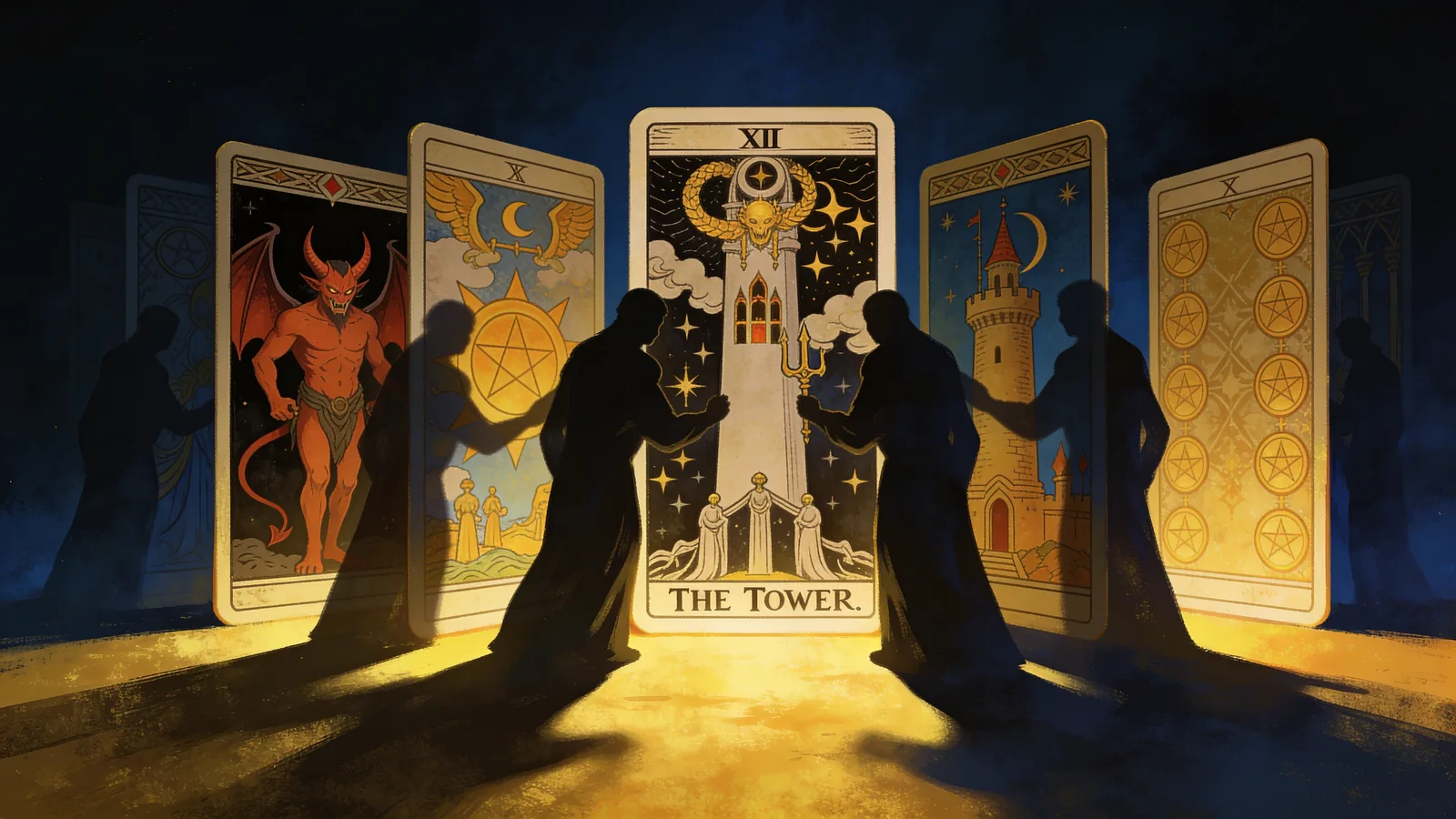
Tarot Spreads for Shadow Work
A three-position spread and a four-card pattern spread for looking at what you usually avoid.
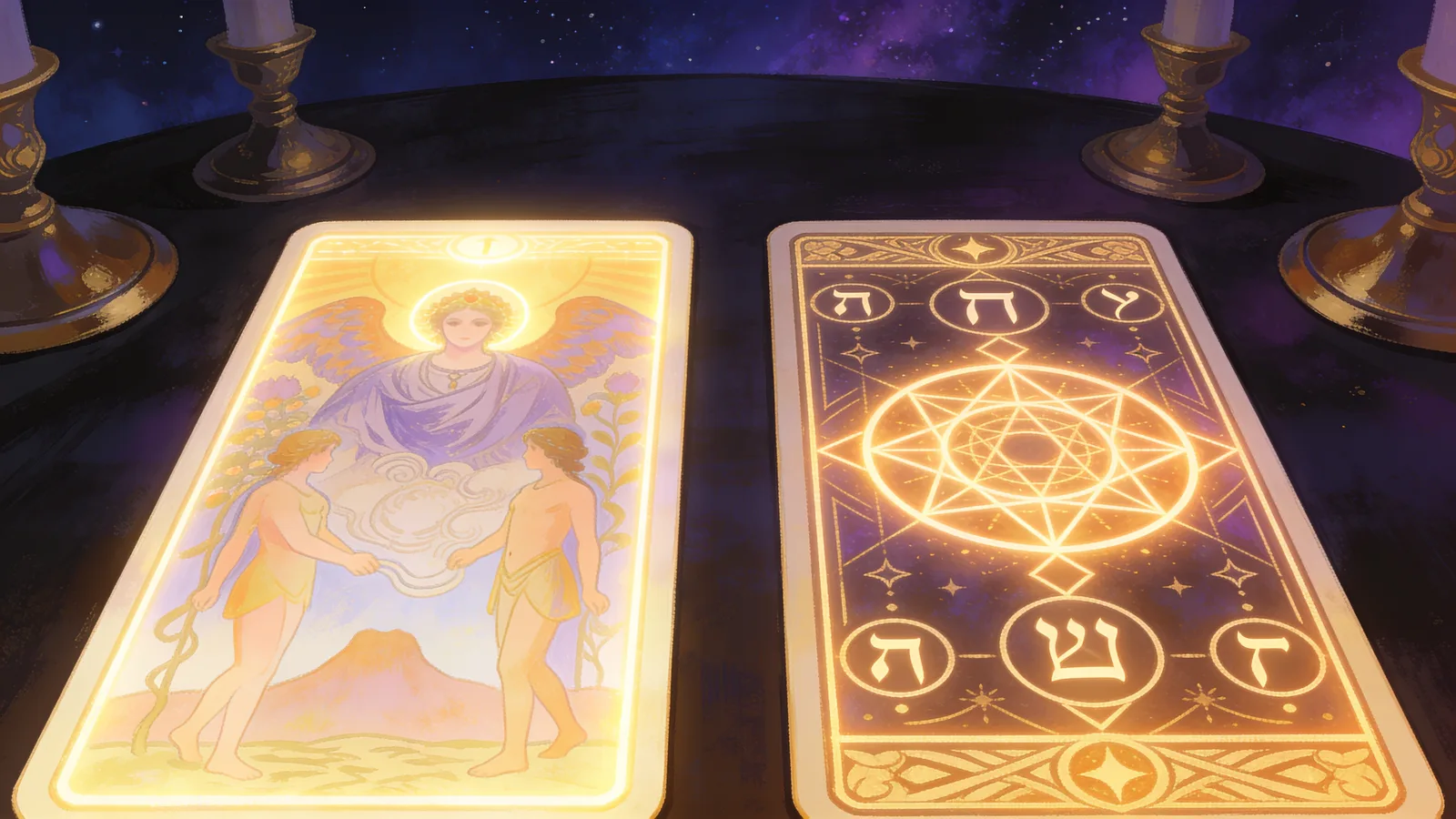
Thoth Tarot vs Rider-Waite: What's the Difference
Two decks built for two different jobs: one to be read at a glance, the other to be studied for years.