Gareth Knight and the Western Mystery Tradition
by Redazione · 9 October 2026 · 5 min read
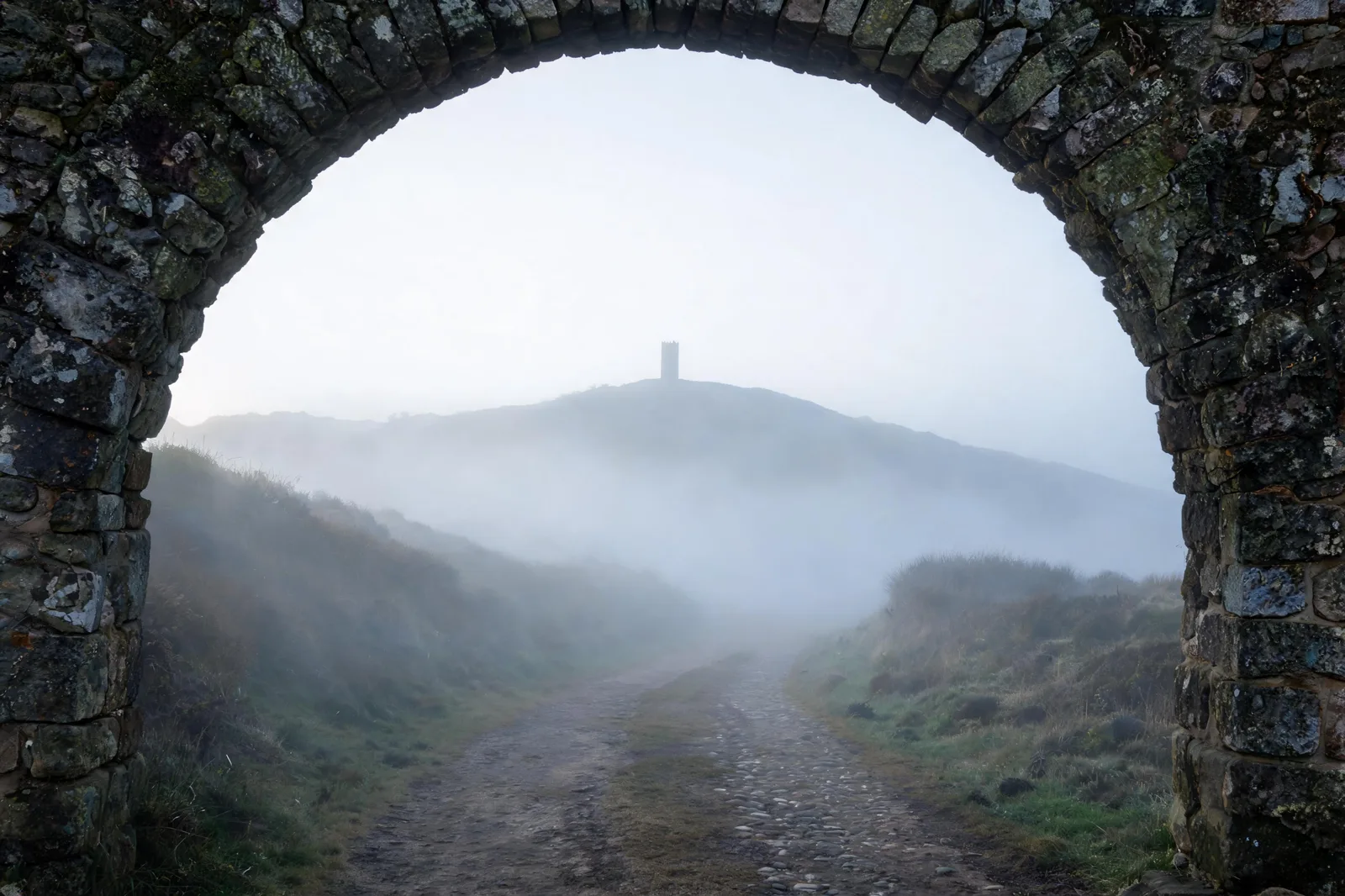
Gareth Knight tarot work treats the cards less as a divination set than as doorways for guided inner journeying, a method he carried from Dion Fortune's own lodge into decades of his own teaching and writing on the Western Mystery Tradition. Born Basil Wilby in 1930, he trained inside the Society of the Inner Light as a young man and spent the rest of a long working life translating its Qabalistic method into books a reader without lodge membership could actually use.
From the Society of the Inner Light to His Own Path
Knight entered Fortune's circle not long after her death in 1946, studying under senior members who had known her directly, and he absorbed the Society's working method of pathworking, a guided visualisation through symbolic landscapes meant to build real inner experience rather than mere fantasy. His first major book, A Practical Guide to Qabalistic Symbolism, appeared in 1965 and became one of the clearest public explanations of how the Tree of Life, its paths and its correspondences could structure a student's inner work. He later moved away from the Society itself and ran independent groups and schools for decades, continuing to teach the same core method under his own direction rather than the Society's.
Gareth Knight Tarot: Pathworking as the Real Method
What distinguishes Knight's approach to The Society of the Inner Light and Its Tarot Teaching's own legacy is less doctrine than emphasis: where some teachers treat the tarot chiefly as a system of correspondences to memorise, Knight consistently pushed students toward using individual cards as the starting image of a pathworking, entering the picture in guided imagination and reporting what happened there. The Fool serves this method particularly well in his writing, treated not as a fixed meaning to be looked up but as a doorway the imagination steps through at the start of any new working. That technique owes an acknowledged debt to Carl Jung's active imagination, which Knight discussed openly as a parallel discipline developed independently in psychology.
Arthurian and Christian Esotericism
Knight's other major body of work explored Arthurian legend and a specifically Christian strand of Western esotericism, themes that ran alongside his tarot teaching rather than apart from it. He treated the Grail romances and the Round Table material as another symbolic landscape open to the same pathworking method he applied to the tarot trumps, arguing that the two systems, Qabalistic and Arthurian, described the same inner territory from different cultural starting points. Readers who came to him through Dion Fortune's novels often followed this thread into his later books, which read as much as esoteric history as instruction manuals.
A Long Teaching Career
Knight wrote prolifically into his nineties, revising and reissuing earlier work and publishing new studies of the Western Mystery Tradition's history and practice; he continued to lead groups and correspondence study well into his final years. He died in 2022, leaving behind one of the largest bodies of accessible writing on Qabalistic pathworking produced by any single author in the English-speaking esoteric world. His books remain in print and continue to be used as entry points by students who want a structured, text-based route into the lodge methods that Fortune and her immediate circle once taught only face to face.
Much of that output was collaborative rather than solitary. Knight worked for years alongside Christine Hartley, another student of Fortune's circle, and later with a rotating set of co-teachers in his own groups, publishing joint studies of historical case material alongside his solo books on Qabalistic method. That habit of working in pairs or small teaching circles, rather than as a single isolated author, echoes the lodge structure he first learned under Fortune: pathworking in his teaching was always something done with other people present to witness and discuss the imagery, never a purely private exercise performed and then forgotten.
Why This Matters for a Thoth Reader
A reader trained on the Thoth deck's dense correspondences can find Knight's method a useful complement rather than a rival system: his books treat the same cards not as a table to memorise but as a set of doors, each one entered slowly and reported on honestly. That shift from correspondence table to guided image does not replace the Thoth deck's own intellectual structure, built up through The A∴A∴ and the Thoth Tarot as a Teaching Tool's very different grade curriculum, but it offers a second, more experiential way into the same Major Arcana, one built for solitary study rather than examination.
Frequently Asked Questions
What is Gareth Knight best known for in tarot circles? His use of tarot pathworking, guided visualisation starting from a single card, drawn from his training in Dion Fortune's Society of the Inner Light.
Did Gareth Knight invent pathworking? No. He inherited the method from Fortune's own circle and became one of its most prolific popularisers in print.
How does his approach differ from a Qabalah reference book? His books push a reader toward direct guided imagination with a card rather than only memorising its correspondences.
Is Gareth Knight's work still available? Yes. His major books remain in print and are widely used as introductions to Qabalistic pathworking.
Questions
What is Gareth Knight best known for in tarot circles?
His use of tarot pathworking, guided visualisation starting from a single card, drawn from his training in Dion Fortune's Society of the Inner Light.
Did Gareth Knight invent pathworking?
No. He inherited the method from Fortune's own circle and became one of its most prolific popularisers in print.
How does his approach differ from a Qabalah reference book?
His books push a reader toward direct guided imagination with a card rather than only memorising its correspondences.
Is Gareth Knight's work still available?
Yes. His major books remain in print and are widely used as introductions to Qabalistic pathworking.
This article talks about
You might also like
 Symbolism
 Symbolism
 Spirituality
© 2026 TAROTS chat (tarots.chat). All rights reserved. No part of this article may be reproduced, distributed or adapted without the owner's written permission.
The Journal
From the Journal
Chosen for this page
 Spirituality
The Magus Tarot Card Meaning: Willpower, Manifestation and Divine Connection
3 min read
More in Spirituality Kabbalah
 Symbolism
 Major Arcana
 Thoth Tarot
 Symbolism
 Symbolism
 Symbolism
 Kabbalah