Why Tarot Is Still a Card Game in Half of Europe
by Redazione · 9 October 2026 · 5 min read
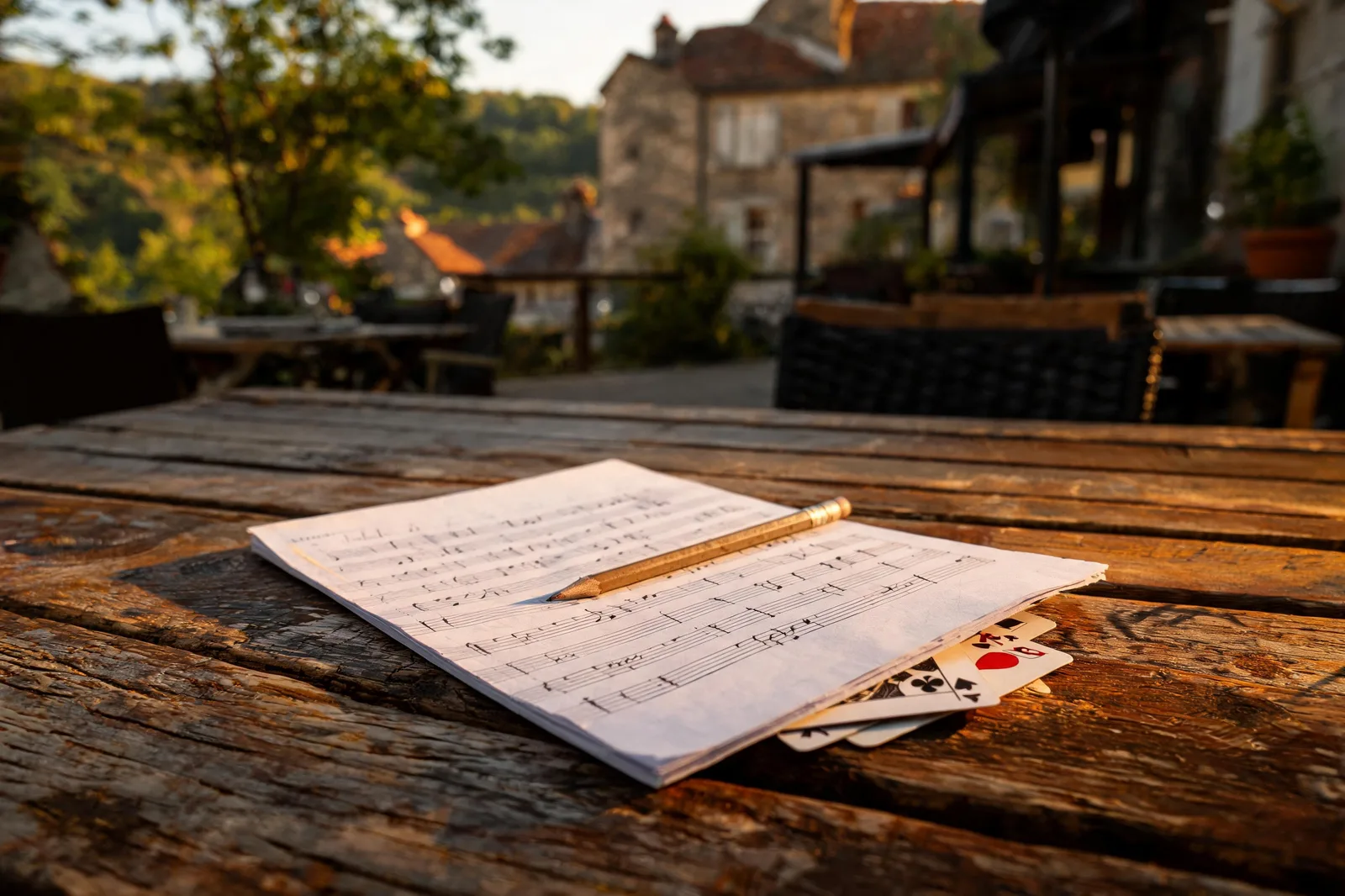
The surprise waiting at a French card table
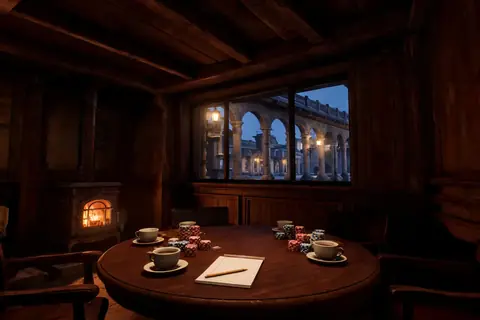
Tell most English-speaking readers that tarot is still played as a card game in continental Europe and watch the confusion on their faces. The tarot card game europe keeps alive bears almost no resemblance to a reading: no questions, no spreads, no interpretation, just a brisk trick-taking game for three to five players, scored with a pencil and argued over at kitchen tables from Brittany to the Alps. In France alone, Jeu de Tarot has federations, published rulebooks and organised tournaments, a living card-game culture that never stopped running in parallel to the occult tradition most readers assume is tarot's only identity.
One deck, two completely separate afterlives
The split happened gradually rather than at any single moment. Northern Italy produced the game in the fifteenth century as an expanded trick-taking deck, and ordinary players across much of the continent simply kept playing it as a game for the following centuries, largely untouched by the occult reinvention that began with figures like Antoine Court de Gébelin in the 1780s, whose theory is examined properly in Court de Gebelin's Egyptian Hunch and Nine Volumes of Certainty. The esoteric tradition that grew out of that speculation travelled mostly through England, France's occult salons and later America, while the game itself stayed a game in the households that had always used it that way, largely indifferent to what Paris intellectuals were theorising about Egyptian origins.
France keeps the biggest living scene
Jeu de Tarot is the most visible survivor, played with a 78-card deck close in structure to the Tarot de Marseille pattern, complete with its own bidding system, a dog (chien) of set-aside cards, and scoring built around the lowest trumps carrying outsized value. It has a genuine competitive culture behind it, clubs, regional tournaments and a national federation, treated by its players with the same seriousness bridge or skat gets elsewhere, explored in more technical depth in The Tarot Game in France Today: Jeu de Tarot. Visitors who associate the deck purely with fortune-telling are often startled to find French friends arguing cheerfully over trump strategy with the same cards a reader somewhere else might use for a spread involving The Star.
Central Europe runs its own variant family
Move east and the game survives under different names and rules entirely. Austria, parts of Germany, Hungary and neighbouring regions kept their own Tarock traditions alive, often using a shorter or regionally modified deck and distinct scoring conventions, a lineage covered in detail in Industrie und Glück: The Austrian Tarock Game. These variants were historically embedded in coffeehouse and tavern culture rather than private occult circles, ordinary social card games that happened to use tarot cards because that was simply the deck available, not because anyone at the table cared about hermetic symbolism.
Italy still plays its own ancestor version
Italy, the game's birthplace, kept regional versions running as well, including shortened decks like the Tarocchino played in and around Bologna and other local patterns elsewhere on the peninsula. These games are less internationally visible than the French or Central European traditions today, played mostly within specific regional communities rather than organised at a national level, but they represent the oldest continuous thread connecting the modern card table back to the deck's fifteenth-century origins as an expanded playing-card game rather than any kind of divinatory tool.
Why the split still confuses outsiders
The genuinely funny part of the anecdote is how little these two worlds talk to each other. A French Jeu de Tarot player and an English-speaking tarot reader can describe the exact same seventy-eight-card structure and mean almost entirely different activities, one competitive and numeric, the other symbolic and interpretive, with surprisingly little cultural overlap between the communities that practise each. Tourists occasionally discover this the hard way, asking a European card club to read their fortune and receiving, at best, a polite correction and an offer to deal them into the next hand instead.
Scoring quirks that reward the lowest cards
One detail travels across nearly every surviving variant and tends to startle newcomers taught only the divinatory deck: the lowest-numbered trumps often carry disproportionate scoring value, alongside the highest one, a structural quirk meant to keep weaker hands competitively interesting rather than simply predictable. French Jeu de Tarot calls these the "bouts," prized cards worth protecting or capturing depending on which side of the bid a player sits on, and similar logic shows up under different names in the Central European Tarock family. It is a reminder that these rules evolved purely to make a trick-taking game more strategically interesting over centuries of actual play, with absolutely no symbolic intention behind the scoring at all.
A split worth remembering
Tarot's two lives, game and oracle, are not rivals so much as parallel histories that happened to share a deck and, for a while, nothing else. Readers interested in the symbolic tradition lose nothing by knowing the game survived intact elsewhere; if anything, it is a useful reminder that the cards' occult meaning is a later addition layered onto an older, simpler object, not the deck's only or original purpose.
The Tarot card games Wikipedia entry gives a fuller regional breakdown of the surviving variants across the continent.
Questions
Is the tarot card game played in Europe the same as fortune-telling tarot?
It uses a structurally similar deck but a completely different practice: a trick-taking card game with bidding and scoring, with no reading or interpretation involved.
Which European countries still play tarot as a card game?
France has the largest organised scene with Jeu de Tarot, while Austria, Germany, Hungary and parts of Italy keep their own regional Tarock and Tarocchino traditions alive.
Did the card game or the occult tradition come first?
The card game came first, in fifteenth-century northern Italy. The occult and divinatory reinterpretation developed centuries later, starting mainly in the late eighteenth century.
Do European tarot card game players use the cards for readings too?
Generally no. The game and the divinatory tradition exist as largely separate cultures today, with little practical overlap between competitive players and tarot readers.
This article talks about
You might also like
 Tarot Journal
 Tarot Journal
 Tarot Journal
© 2026 TAROTS chat (tarots.chat). All rights reserved. No part of this article may be reproduced, distributed or adapted without the owner's written permission.
The Journal
 Love
 Symbolism
 Symbolism
 Symbolism
 Kabbalah
 Symbolism
 Symbolism
 Symbolism
 Kabbalah